The language of marketing
Positioning. Category creation. Multi-touch attribution. Share of voice. If you came from engineering or sales, the language of marketing sounds like a foreign language. Here is a practical go-to-market glossary, and why understanding these terms makes you better at your job.

The language of marketing is a glossary built around four questions: who is the customer, what should we say, how do we reach them, and how do we know it worked. Every term fits into one of those buckets.
You're in a marketing all-hands. The CMO says, "Brand lift is up 12 points, but our share of voice dropped in the category. We need to rethink our demand gen mix and tighten multi-touch attribution before the board meeting."
Everyone nods. You nod too. You have no idea what just happened.
If you came from engineering or sales, you know this feeling. The language of marketing is its own dialect. Nobody hands you a dictionary when you walk into your first quarterly business review.
In The language of sales, I covered the vocabulary of money: pipeline, bookings, ARR, churn, NDR, CAC, LTV. That post tells the story of revenue. Can we acquire customers, keep them, and grow them?
This post tells a different story. The story of influence. How do you define who to reach? What do you say to them? How do you get in front of them? And how do you prove any of it worked?
Every marketing term maps to one of those four questions. That's the structure.
What story does marketing tell?
Sales answers: is the money coming in?
Marketing answers: are we reaching the right people with the right message in the right place, and can we prove it?
Four questions. That's the entire discipline.
- Who is the customer? This is where market sizing, segmentation, and personas live.
- What should we say? This is positioning, messaging, narrative, and value propositions.
- How do we reach them? This is demand generation, content, paid media, events, PLG.
- How do we know it worked? This is attribution, brand measurement, and campaign analytics.
Every term I cover below fits into one of these four buckets.
How do you define your market?
Before you can market anything, you need to know who you're marketing to. That starts with understanding how big the opportunity is and then narrowing it down to who you can actually reach. The terms that do this work are TAM, SAM, and SOM for sizing, then ICP, personas, and segments for focus.
TAM (Total Addressable Market) is the total revenue opportunity if you captured 100% of the market. Every possible customer, everywhere. It's the whole ocean.
SAM (Serviceable Addressable Market) is the portion of the TAM you can realistically serve with your current product and business model. You sell a database. Your TAM might include every company that stores data. Your SAM is companies that need the specific type of database you built.
SOM (Serviceable Obtainable Market) is what you can actually capture in the near term, given your resources, brand awareness, and competitive position. SOM is the fish you can catch this year.
These three terms cascade from big to small. When Stripe launched in 2011, the global digital payments TAM was hundreds of billions. But Stripe's SOM at launch was small: internet-native startups whose developers wanted a simple API for payments. They didn't try to sell to Walmart. They sold to the next Y Combinator batch. The SOM grew as the product matured and the team scaled.
Inside your SOM, you need to know exactly who you're selling to. That's your ICP (Ideal Customer Profile). The ICP defines the characteristics of the companies most likely to buy, succeed, and stay. Company size. Industry. Tech stack. Growth stage. Budget.
But the ICP isn't enough. I wrote about this in How to identify your ideal customer profile, and why that's not good enough. The ICP tells you who the customer is. It doesn't tell you what they're trying to do or why. For that, you need to understand their behavior.
Personas are fictional representations of individual buyers within your target accounts. The backend developer evaluating your API. The VP of Engineering approving the purchase. The procurement officer negotiating the contract. Each persona has different pain points and different language. Your marketing has to speak to all of them.
Segments are groups of customers who share common characteristics. You might segment by company size, by use case, or by buying behavior. Segments help you decide where to focus and what to say to each group.
The cascade: TAM gives you the big number for your investor deck. SAM tells you the realistic ceiling. SOM tells you the plan for this year. ICP tells you which companies to target. Personas tell you which humans to reach. Segments tell you how to group them.
What is positioning and why does it matter?
Get this one decision wrong and nothing else works. Get it right and everything else gets easier. Positioning defines who your product is for, what it does better than every alternative, and why that matters. April Dunford's Obviously Awesome framework breaks it into five components: competitive alternatives, unique attributes, value, target customer, and market category.
Positioning answers three questions: who are you for, what do you do better than anyone else, and why does that matter? It defines what your product is, what category it belongs to, and how it differs from every alternative.
April Dunford wrote the definitive framework for this in Obviously Awesome. Her approach breaks positioning into five components: competitive alternatives (what would customers do if you didn't exist?), unique attributes (what can you do that the alternatives can't?), value (what does that uniqueness mean for the customer?), target customer (who cares most about that value?), and market category (what context makes your value obvious?).
One company, one positioning. It's singular.
Messaging is how you communicate that positioning to different audiences. Messaging multiplies. Same positioning, different messages for developers, CTOs, and procurement. The developer cares about the API. The CTO cares about reliability and scale. Procurement cares about compliance and pricing. Same product. Different words.
I wrote about this distinction in detail in Does positioning still matter?. The short version: positioning is strategic and stable. Messaging is tactical and constantly evolving. If you're changing your positioning every quarter, you have a strategy problem. If you're not changing your messaging every quarter, you have an execution problem.
Value proposition is the specific promise you make to the customer. It's the bridge between your positioning and the customer's problem. "Process payments in seven lines of code" is a value proposition. "The payments platform for the internet" is positioning. The value proposition is what the customer hears. The positioning is what the marketing team uses to stay aligned.
Narrative is the bigger story your company tells about the world. It's about the change happening in the market, not about your product. Stripe's narrative wasn't "we built a payments API." It was "the internet economy is growing, and existing payment infrastructure is holding it back." The narrative creates urgency. The positioning fills the gap.
Category creation is when you invent a new market category instead of competing in an existing one. Salesforce did this in 1999 when they launched with the "No Software" slogan. They didn't position themselves as a better CRM. They created the category of cloud CRM. HubSpot did it in 2006 when Brian Halligan coined the term "inbound marketing." They didn't compete with existing email marketing tools. They created a new way to think about attracting customers.
Category creation is a bold bet. It's expensive. It takes years. You have to educate the entire market on why the category exists before you can sell them your product. Most companies should position in an existing category and differentiate. But when it works, the company that creates the category usually owns it for a long time.
Competitive positioning is how you differentiate from alternatives. And the alternatives aren't just direct competitors. They include the status quo (doing nothing) and workarounds (spreadsheets, scripts, duct tape). When I worked at GitHub, our biggest competitor wasn't another Git hosting service. It was companies that had no version control at all, or teams passing zip files around by email. The status quo is always the hardest competitor to beat because it costs nothing and requires no change.
How do you reach your audience?
You know who to reach and what to say. Now: how do you get in front of them?
Demand generation is the umbrella term for creating awareness and interest. Demand gen is the engine. Content, events, ads, and partnerships are the fuel. When a CMO says "our demand gen is weak," they mean not enough of the right people are hearing about the product.
Demand generation in developer marketing skews heavily toward inbound channels: content, SEO, community, and open source. The most effective developer marketing programs combine content marketing, product-led growth, and account-based marketing to reach different segments.
Inbound marketing attracts people to you. Content, SEO, community, open source, word of mouth. The customer comes to you because you created something valuable. Outbound marketing interrupts. Ads, cold emails, sponsorships, direct mail. You go to the customer. Developer marketing skews heavily inbound because developers distrust interruptions and trust recommendations from peers.
Content marketing is creating valuable content to attract and retain an audience. Blog posts, tutorials, documentation, videos. Different from advertising because you're providing value, not buying attention. I talk about content as the spine of the growth engine in my PLG post. Content powers SEO. SEO drives signups. Signups feed pipeline.
SEO (Search Engine Optimization) is earning organic search traffic. SEM (Search Engine Marketing) is buying it. SEO is slow and compounding. SEM is fast and linear. The traffic stops when the budget stops. Developer companies usually start with SEO because developers trust organic results.
Paid media, earned media, and owned media are the three channels. Paid means ads; you rent the audience. Earned means press, word of mouth, social sharing; the audience finds you. Owned means your blog, docs, newsletter, and community; you built the audience. Owned is where you build equity. The email list you grow and the community you cultivate are assets nobody can take away.
ABM (Account-Based Marketing) flips the funnel. Instead of casting a wide net, you pick your target accounts first and build campaigns specifically for them. Research the account. Identify the buying committee. Create content for their specific problems. Run ads only their employees see. ABM works best for enterprise sales where the deal size justifies the effort. I cover this in Building a developer ABM strategy.
PLG (Product-Led Growth) means the product is the marketing. Free tier. Self-serve signup. Usage-based conversion. Stripe, Supabase, and Vercel all run this motion. The developer tries it, loves it, brings it into the company. The internal sale is half done before procurement gets involved. I wrote about the marketing apparatus for PLG in detail.
What do campaign metrics actually mean?
Marketing runs campaigns. Campaigns produce numbers. Here's what those numbers mean.
Impressions are how many times your ad or content was displayed. Reach is how many unique people saw it. Frequency is how many times each person saw it. If your ad appeared 10,000 times to 3,000 people, that's 10,000 impressions, 3,000 reach, and a frequency of about 3.3.
CTR (Click-Through Rate) is the percentage of impressions that resulted in clicks. CPC (Cost Per Click) is what you paid for each click. CPM (Cost Per Mille) is the cost per thousand impressions. These three measure the efficiency of getting eyeballs and clicks.
CPA (Cost Per Acquisition) is the cost per desired action: a signup, a download, a trial start. ROAS (Return On Ad Spend) is the revenue generated per dollar of ad spend. Conversion rate is the percentage of visitors who take the desired action.
For developer marketing, CPA and conversion rate matter more than impressions. I have never once impressed a developer with impressions. You can show your ad to a million people and generate zero signups. What matters is whether the right people took the right action. Track CPA and conversion rate obsessively. Report impressions when someone asks, but don't confuse visibility with results.
Why is attribution so hard?
You spent money. Something happened. Now prove the connection.
Attribution is the hardest measurement problem in developer marketing. Developer buying journeys are nonlinear, span months, and include invisible touchpoints like peer recommendations and GitHub stars. No single attribution model captures the full picture. The best developer marketing teams combine multi-touch attribution with marketing mix modeling and present directional data rather than claiming false precision.
First-touch attribution gives all the credit to whatever first brought the customer to you. They clicked a Google ad? The ad gets 100% of the credit, even if they didn't sign up for six months.
Last-touch attribution gives all the credit to whatever happened right before conversion. They clicked a retargeting ad and signed up? The retargeting ad gets 100% of the credit, even if they'd been reading your blog for a year.
Both are wrong. Both are useful. First-touch tells you what fills the top of the funnel. Last-touch tells you what closes.
Multi-touch attribution tries to spread credit across all touchpoints. The blog post gets some credit. The conference talk gets some credit. The retargeting ad gets some credit. The math is more honest, but also more complex. You need good tooling and clean data to make it work.
Marketing mix modeling takes a statistical approach, using historical data to estimate the impact of different marketing channels on outcomes. It doesn't track individual users. It looks at aggregate patterns. When we increased blog output by 30%, did signups go up? When we cut conference spending, did pipeline drop three months later? Mix modeling is blunt but it works at scale.
Perfect attribution is impossible in developer marketing. A developer reads your blog post. She sees your talk at a meetup six weeks later. She stars your GitHub repo. She mentions you to a colleague at lunch. The colleague signs up, doesn't convert. Six months later, the original developer starts a new job and brings your product in. Which touchpoint gets credit?
None of them. All of them. The journey is nonlinear, multi-month, and often invisible.
This is why developer marketing teams fight for budget. The CFO wants a clean line from spend to revenue. Developer marketing can't draw that line because the influence is diffuse and the cycle is long.
The solution is earning trust from leadership by consistently showing directional data, not a better attribution model. Show the trend lines. Show the correlation between content output and signups. Show what happened to pipeline after the conference. Prove that the machine is working, even if you can't prove which gear turned which wheel. I wrote about this in How to measure developer marketing ROI.
What is brand and why is it the long game?
Demand gen fills the pipeline next quarter. Brand fills it for the next decade.
Brand and brand equity are the two terms that matter most here, and they sit at the heart of the long game. Brand is the only marketing asset that compounds indefinitely.
Brand is what people think of when they hear your name. Not your logo. Not your color palette. Brand is the sum of every experience, impression, and association built over time. When a developer hears "Stripe," they think clean APIs, great documentation, developer-first. That association was built over thirteen years of consistent execution.
Brand equity is the commercial value of that perception. Strong brand equity means customers choose you over alternatives even when the alternatives are cheaper or have more features. They trust you. That trust is worth money. Stripe's brand equity with developers is worth billions. It's why they can charge higher processing fees than commodity payment providers and nobody blinks.
Share of voice measures what percentage of the conversation in your category involves your brand. If there are 1,000 mentions of "cloud databases" online in a month and 200 mention your product, your share of voice is 20%. It's a rough measure, but it tells you whether you're part of the conversation or invisible.
Brand lift is the measurable increase in brand awareness or perception after a campaign. You run a sponsorship at a major conference. Before the event, 30% of your target audience recognized your brand. After, 45%. That 15-point increase is brand lift.
NPS (Net Promoter Score) measures how likely customers are to recommend you. On a scale of 0 to 10, promoters score 9 or 10, passives score 7 or 8, and detractors score 0 through 6. Your NPS is the percentage of promoters minus the percentage of detractors. NPS is useful but overused. A high NPS feels good. A high NPS with flat revenue means people like you but aren't buying more. Pair it with other metrics.
What sits above tactics?
Above the tactics sits the strategy. These are the decisions that determine how everything else works.
GTM motion is how you take your product to market. Sales-led means your revenue runs through a sales team. Product-led means developers self-serve and the product drives adoption. Community-led means your user community is the primary growth engine. Most companies run a hybrid: PLG at the bottom, sales-assisted in the middle, enterprise sales at the top. The motion determines your marketing mix. A PLG company invests heavily in content and developer experience. A sales-led company invests heavily in enablement and events. Your go-to-market plan codifies this.
Launch tiers reflect that not all launches are equal. Tier 1 is a major product launch: press embargo, launch blog post, social campaign, analyst briefing, maybe a launch event. Tier 2 is a significant feature: blog post, social media, email to customers, maybe a webinar. Tier 3 is a minor update: changelog entry, docs update, maybe a tweet. When everything is a Tier 1 launch, nothing is. Discipline in tiering keeps your audience from tuning out.
Enablement is arming the sales team with the materials they need to sell. Battlecards that compare you to competitors. One-pagers for specific use cases. Demo scripts. Objection handling guides. Pricing calculators. The best enablement materials are built from real customer conversations, not from the marketing team's imagination. I cover this in detail in What does product marketing do?.
Competitive intelligence is systematic tracking of what competitors are doing. Pricing changes. Feature launches. Messaging shifts. Hiring patterns (if they're hiring five enterprise reps, expect an enterprise push). Job postings are one of the best sources of competitive intelligence because they reveal strategy before the company announces it.
Win/loss analysis is interviewing customers who chose you, and customers who didn't, to understand why. Most companies only talk to customers who bought. The real learning comes from the ones who walked away. Win/loss analysis is the best source of positioning insight your company has. Most companies don't do it.
HubSpot: a category creation case study
In 2006, Brian Halligan and Dharmesh Shah were at MIT, frustrated by the state of marketing. The dominant playbook was outbound: cold calls, email blasts, trade show booths, and interruptive ads. Halligan coined the term "inbound marketing" to describe the opposite approach. Attract customers with valuable content. Earn their attention instead of buying it.
They founded HubSpot to sell this idea. But they didn't just build a product. They built a category.
The playbook was textbook. First, name the category. "Inbound marketing" didn't exist before Halligan said it. Second, define it. In 2009, they published Inbound Marketing: Get Found Using Google, Social Media, and Blogs. The book was the manifesto. Third, build the product that owns the category.
They created the vocabulary. "Inbound" versus "outbound." The "marketing funnel." "Lead nurturing." These weren't HubSpot features. They were industry concepts that HubSpot defined, evangelized, and then built tools to execute. When marketers started saying "we need to do more inbound," HubSpot was the answer. That's category creation done right.
The results speak. HubSpot grew from a startup to $2.63 billion in annual revenue by 2024. The word "inbound" became an industry standard. HubSpot runs an annual conference called INBOUND that attracts tens of thousands of marketers.
What's instructive is the positioning stack. The positioning was clear: HubSpot is the all-in-one platform for inbound marketing. The narrative was about a shift in how marketing works. The messaging adapted: small businesses heard about simplicity, enterprises heard about scale, agencies heard about client management. One position. Many messages.
Category creation gave HubSpot a decade-long head start. Competitors had to either adopt HubSpot's vocabulary (which reinforced HubSpot's position) or reject it (which put them on the defensive). Owning the words people use to describe the work is the strongest competitive positioning there is.
Why should you care about any of this?
You're a developer marketer, a DevRel professional, or a technical founder. So what?
Marketing vocabulary is the language of influence. Influence is how you get budget, headcount, and a seat at the strategy table.
Positioning makes your product findable. If your team can't articulate who you're for and what you do better than anyone else, developers won't find you. They'll find the competitor who can. Your docs, your landing pages, your conference talks all need to build from a single clear position. I wrote about the art of storytelling in developer marketing because the story is how the positioning reaches people.
Understanding demand gen makes you more strategic. When you know the difference between inbound and outbound, between paid and earned and owned, you can make smarter decisions about where to invest your time. A DevRel team spending all its effort on conference sponsorships might get better results shifting some of that budget to content and SEO.
Campaign metrics connect your work to outcomes. The CMO doesn't care that you gave a great talk at KubeCon. They care that the talk drove 200 signups, 30 of which converted to paid accounts with an average ACV of $15k. Speaking the language of campaigns lets you translate your impact into terms the business understands.
Attribution humility earns trust. Don't claim credit for things you can't prove. Do show the directional data that connects your work to business outcomes. The team that says "we think our content drove a 15% increase in organic signups, and here's the data" earns more credibility than the team that says "we wrote 20 blog posts."
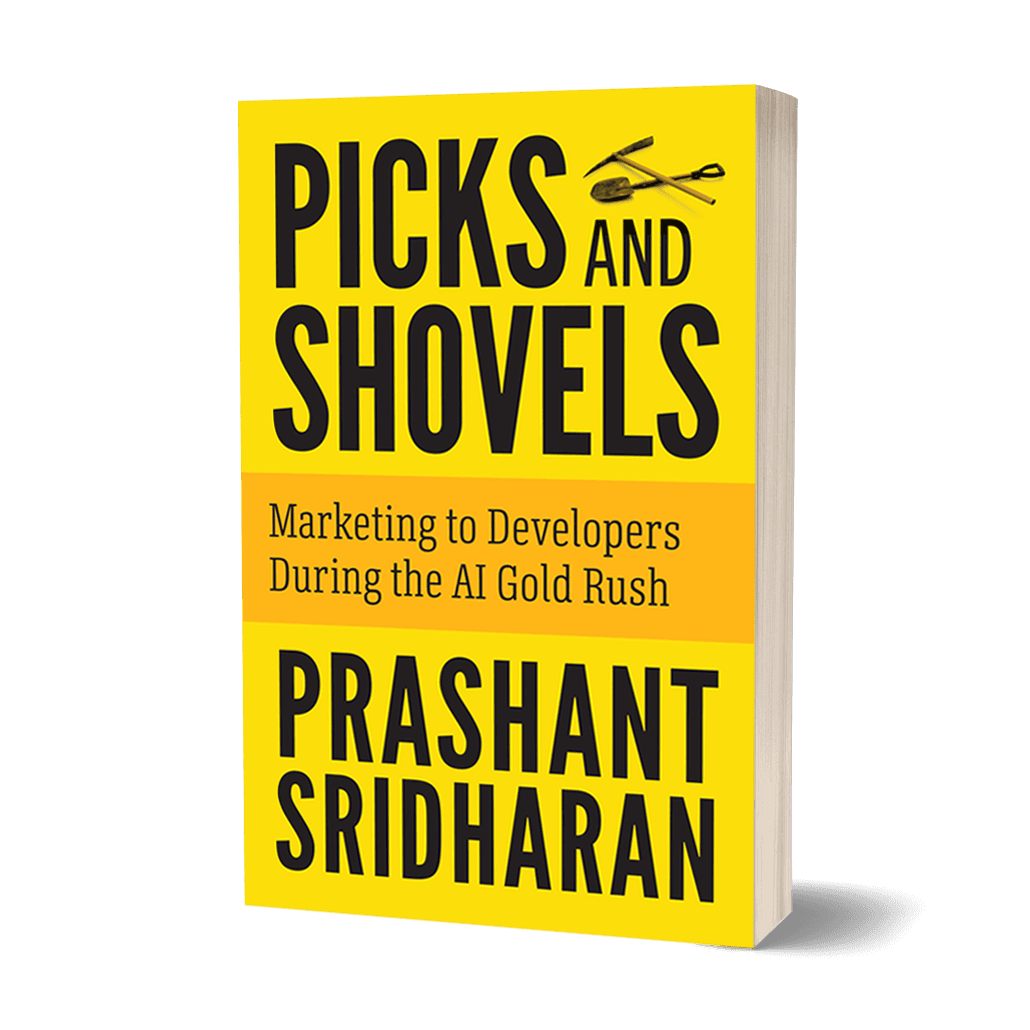
These concepts are covered in more depth in Picks and Shovels: Marketing to Developers During the AI Gold Rush. The book includes frameworks for positioning, messaging, and connecting marketing activities to revenue outcomes.
Quick reference
For those moments when you need a fast definition:
| Term | What it means |
|---|---|
| TAM | Total Addressable Market. The total revenue opportunity if you captured 100% of the market |
| SAM | Serviceable Addressable Market. The portion of TAM you can realistically serve |
| SOM | Serviceable Obtainable Market. What you can actually capture in the near term |
| ICP | Ideal Customer Profile. The characteristics of companies most likely to buy and succeed |
| Persona | A fictional representation of an individual buyer within your target accounts |
| Segment | A group of customers sharing common characteristics |
| Positioning | Who you are, who you're for, and how you're different from every alternative |
| Messaging | How you communicate your positioning to specific audiences in specific contexts |
| Value proposition | The specific promise you make to the customer |
| Narrative | The bigger story about the change happening in the market, not about your product |
| Category creation | Inventing a new market category instead of competing in an existing one |
| Competitive positioning | How you differentiate from alternatives, including the status quo |
| Demand generation | The umbrella term for creating awareness and interest |
| Inbound | Marketing that attracts customers to you through valuable content |
| Outbound | Marketing that interrupts, like ads and cold outreach |
| Content marketing | Creating valuable content to attract and retain an audience |
| SEO | Search Engine Optimization. Earning organic search traffic |
| SEM | Search Engine Marketing. Buying search traffic |
| Paid media | Ads. You rent the audience |
| Earned media | Press, word of mouth, social sharing. The audience finds you |
| Owned media | Your blog, docs, newsletter, community. You built the audience |
| ABM | Account-Based Marketing. Picking target accounts first, then building campaigns for them |
| PLG | Product-Led Growth. The product is the marketing. Free tier, self-serve, usage-based |
| Impressions | How many times your content or ad was displayed |
| Reach | How many unique people saw it |
| Frequency | How many times each person saw it |
| CTR | Click-Through Rate. Percentage of impressions that resulted in clicks |
| CPC | Cost Per Click. What you paid for each click |
| CPM | Cost Per Mille. Cost per thousand impressions |
| CPA | Cost Per Acquisition. Cost per desired action |
| ROAS | Return On Ad Spend. Revenue generated per dollar of ad spend |
| Conversion rate | Percentage of visitors who take a desired action |
| First-touch attribution | All credit goes to whatever first brought the customer |
| Last-touch attribution | All credit goes to whatever happened right before conversion |
| Multi-touch attribution | Credit spread across all touchpoints in the customer journey |
| Marketing mix modeling | Statistical approach using historical data to estimate channel impact |
| Brand | What people think of when they hear your name |
| Brand equity | The commercial value of brand perception |
| Share of voice | What percentage of category conversation involves your brand |
| Brand lift | Measurable increase in brand awareness after a campaign |
| NPS | Net Promoter Score. How likely customers are to recommend you |
| GTM motion | How you take your product to market: sales-led, product-led, community-led, or hybrid |
| Launch tiers | Classification of launches by significance, from Tier 1 (major) to Tier 3 (minor) |
| Enablement | Arming the sales team with materials they need to sell |
| Competitive intelligence | Systematic tracking of what competitors are doing |
| Win/loss analysis | Interviewing customers who chose you, or didn't, to understand why |
The terms are vocabulary. What matters is how they connect. Define the market. Shape the message. Reach the audience. Prove it worked. Four questions. One discipline. That's marketing.

Developer marketing expert with 30+ years of experience at Sun Microsystems, Microsoft, AWS, Meta, Twitter, and Supabase. Author of Picks and Shovels, the Amazon #1 bestseller on developer marketing.
Want the complete playbook?
Picks and Shovels is the definitive guide to developer marketing. Amazon #1 bestseller with practical strategies from 30 years of marketing to developers.