Brand equity
brand EK-wih-tee
The commercial value of customer perception. Strong brand equity means customers pay more, stay longer, and refer others.
Brand equity is the value your brand adds beyond the functional utility of your product. If customers choose your product over an identical competitor's because of your reputation, that price premium is brand equity. If they stay longer because they trust you, that retention benefit is brand equity.
Brand equity has four components. Brand awareness: do they know you exist? Associations: what do they connect with your name? Perceived quality: do they believe your product is good? Loyalty: will they stick with you and recommend you? (NPS measures this.)
Building brand equity takes years. Destroying it takes moments. A single data breach, a tone-deaf marketing campaign, or a pattern of broken promises can erase years of brand building. The asymmetry between building and destroying is why brand should be treated as a strategic asset, not a marketing side project.
Examples
Brand equity commands a price premium.
Two monitoring products have similar features. Product A costs $50k/year and has strong brand equity from years of thought leadership and customer success. Product B costs $30k/year but is unknown. The customer chooses Product A. The $20k premium is brand equity at work.
Brand equity improves retention.
Customers who cited 'brand trust' as a buying factor in their post-sale survey have 95% retention versus 82% for customers who cited 'lowest price.' Brand-driven customers are stickier because their decision was based on trust, not cost.
Measuring brand equity over time.
Annual brand tracking survey among the ICP. Year 1: 15% unaided awareness, 3.2 brand favorability (out of 5). Year 3: 38% unaided awareness, 4.1 favorability. During the same period, CAC decreased 25% and win rate increased 10 points. Brand equity is driving business results.
In practice
Read more on the blog
Frequently asked questions
How do you build brand equity?
Consistent delivery on promises over time. Great product experience. Thought leadership that positions your company as an authority. Customer success stories. Community engagement. Brand equity is not built through advertising campaigns. It is built through every interaction a customer has with your company.
Can startups have brand equity?
Yes, within their niche. A startup known as the best tool for Kubernetes deployment has strong brand equity among Kubernetes users, even if the broader market has never heard of them. Brand equity starts narrow and widens as the company grows.
Related terms
The sum of every perception, association, and feeling people have about your company. What they say about you when you are not in the room.
The percentage of total market conversation that mentions your brand compared to competitors. How much of the conversation you own.
A customer loyalty metric based on one question: how likely are you to recommend us? Score ranges from -100 to +100.
The measurable increase in brand awareness, perception, or intent after a marketing campaign. How much a campaign moved the needle.
Want the complete playbook?
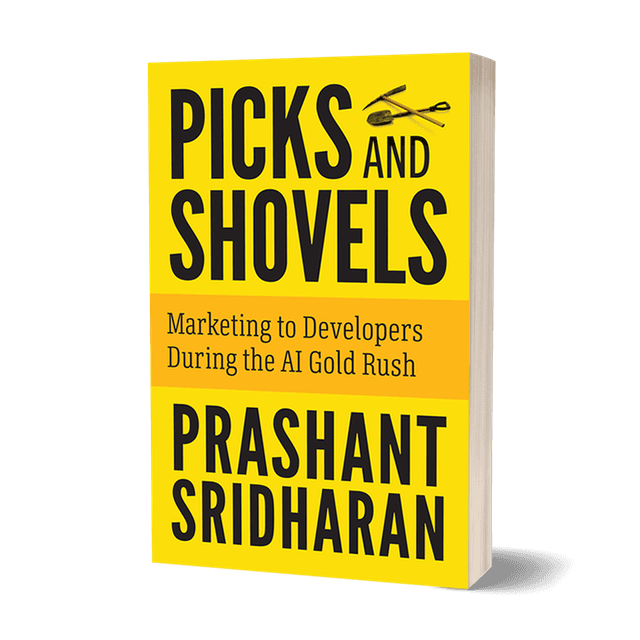
Picks and Shovels is the definitive guide to developer marketing. Amazon #1 bestseller with practical strategies from 30 years of marketing to developers.