Paid media
payd MEE-dee-uh
Any marketing channel where you pay for visibility: search ads, social ads, display ads, sponsorships, and paid content placements.
Paid media is every channel where you pay to put your message in front of an audience. Google Ads, LinkedIn Ads, Twitter/X ads, display networks, podcast sponsorships, conference sponsorships, and paid newsletter placements.
Paid media offers control and speed. You choose who sees your ad (targeting), when they see it (scheduling), and what they see (creative). You can launch today and measure results tomorrow. That immediacy is valuable for product launches, event promotion, and testing new messages.
The weakness of paid media is the off switch. Stop paying and the traffic stops. There is no compounding effect. You rent attention instead of earning it. The best marketing strategies use paid media for speed and testing while building owned and earned channels for long-term sustainability.
Examples
A B2B paid media mix.
Total paid budget: $200k/quarter. Google Ads: $80k (high-intent search). LinkedIn Ads: $60k (ICP targeting). Conference sponsorships: $40k (brand awareness). Newsletter sponsorships: $20k (developer audience). Each channel measured on pipeline contribution.
Paid media tests messaging before a launch.
The team runs three different ad headlines on LinkedIn targeting CTOs. Headline A: 2.1% CTR. Headline B: 0.8% CTR. Headline C: 3.4% CTR. Headline C becomes the website headline and conference talk title. Paid media as a research tool.
Paid media dependency creates risk.
The company generates 70% of pipeline from Google Ads. Google increases CPC by 25%. Pipeline cost jumps $300k annually. The CMO accelerates investment in SEO and content to reduce paid dependency from 70% to 40% over 12 months.
In practice
Read more on the blog
Frequently asked questions
What is the difference between paid, owned, and earned media?
Paid media is advertising you buy (Google Ads, LinkedIn Ads). Owned media is content you control (your blog, your email list, your website). Earned media is coverage you earn (press mentions, social shares, word of mouth). The strongest marketing programs invest in all three.
How do you measure paid media effectiveness?
Primary metric: pipeline contribution (dollars of qualified pipeline generated per dollar spent). Secondary metrics: cost per lead, cost per opportunity, ROAS. Avoid optimizing for impressions or clicks alone. Those are vanity metrics unless they connect to pipeline.
Related terms
Publicity and attention you did not pay for. Press coverage, social shares, word of mouth, and organic mentions.
Marketing channels you control: your website, blog, email list, documentation, and social accounts. Content you create and distribute yourself.
Paying for ads that appear in search engine results. Google Ads is the primary platform. Instant visibility but stops when you stop paying.
How much you pay each time someone clicks your ad. The basic unit of cost in pay-per-click advertising.
Revenue generated per dollar spent on advertising. A ROAS of 5:1 means every $1 in ad spend generated $5 in revenue.
Want the complete playbook?
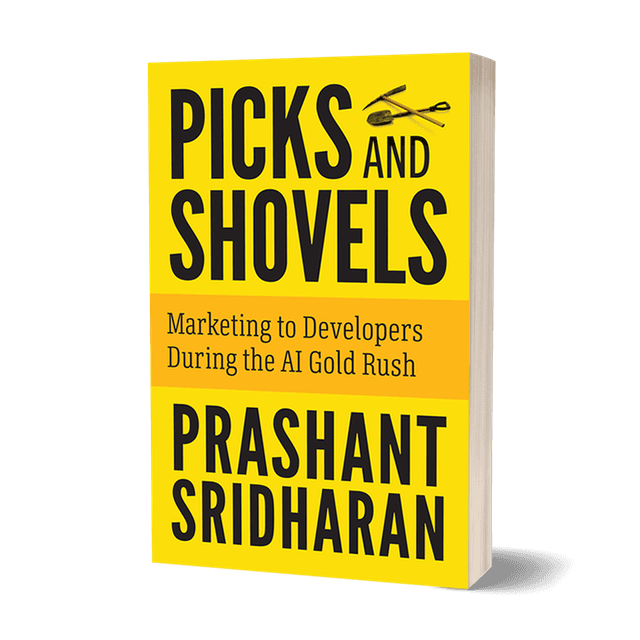
Picks and Shovels is the definitive guide to developer marketing. Amazon #1 bestseller with practical strategies from 30 years of marketing to developers.