Search engine marketing
ess-ee-EM
Paying for ads that appear in search engine results. Google Ads is the primary platform. Instant visibility but stops when you stop paying.
SEM is paid search advertising. You bid on keywords and your ad appears at the top of search results when someone searches for those terms. You pay when someone clicks (pay-per-click or PPC).
SEM gives you instant visibility. Launch a Google Ads campaign today and appear at the top of search results tomorrow. That speed makes SEM useful for testing messaging, launching new products, and generating pipeline while SEO builds over months.
The economics of SEM in B2B are challenging. Developer-related keywords are expensive ($20-100+ per click). If 2% of clicks become leads and 10% of leads become opportunities, your cost per opportunity can exceed $10k. SEM works best for high-intent keywords (comparisons, pricing, alternatives) where the searcher is close to a purchase decision.
Examples
A SEM campaign targeting high-intent keywords.
The company bids on 'alternative to [competitor]' and '[competitor] pricing.' CPC: $35. Click-to-demo rate: 8%. Demo-to-opportunity rate: 30%. Cost per opportunity: $1,458. ACV: $40k. The math works for high-intent keywords.
SEM for a product launch.
New product launches next month. SEO will take 6+ months to rank. The team allocates $50k for Google Ads on launch-related keywords. Result: 1,200 landing page visits, 90 signups, 12 demos booked in the first two weeks. SEM bridges the gap while organic builds.
SEM spend gets out of control.
The team spends $30k/month on Google Ads. Monthly leads from SEM: 150. Monthly pipeline from SEM: $200k. Pipeline-to-spend ratio: 6.7x. The CFO asks if those leads would have come anyway through organic. The team runs a holdback test and discovers 40% of SEM leads also visit organic results. They reduce spend to $18k and pipeline drops only 15%.
In practice
Read more on the blog
Frequently asked questions
How much should B2B companies spend on SEM?
Typically 10-25% of the total marketing budget. For early-stage companies without organic traffic, SEM might be 30-40% while SEO builds. For companies with strong organic presence, SEM can be reduced to 5-10% focused on high-intent keywords and competitive terms.
Which keywords should B2B companies bid on?
Start with bottom-of-funnel: competitor comparisons, pricing keywords, and 'best [category]' terms. These have the highest conversion rates. Expand to mid-funnel how-to keywords only if bottom-funnel keywords are maxed out and you have budget to invest in longer-cycle leads.
Related terms
The practice of improving your website to rank higher in search results. The longest-lasting, highest-ROI demand generation channel.
How much you pay each time someone clicks your ad. The basic unit of cost in pay-per-click advertising.
The cost per 1,000 ad impressions. The standard pricing unit for display advertising and brand awareness campaigns.
Any marketing channel where you pay for visibility: search ads, social ads, display ads, sponsorships, and paid content placements.
The percentage of people who click your ad or link after seeing it. Clicks divided by impressions. Measures how compelling your message is.
Want the complete playbook?
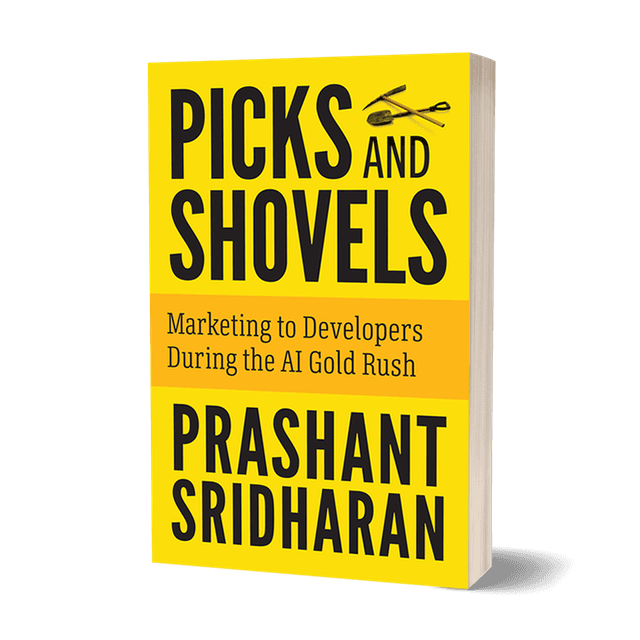
Picks and Shovels is the definitive guide to developer marketing. Amazon #1 bestseller with practical strategies from 30 years of marketing to developers.