When communities become toxic
The Olympics remind us that fierce competition and mutual respect can coexist. Somewhere along the way, tech forgot that.

Developer communities on Twitter/X, Reddit, Hacker News, and Discord have shifted from collaborative idea-sharing to performative outrage. Experienced practitioners at companies like Stripe, Datadog, and Cloudflare have gone quiet. Toxic community dynamics cost the industry its most valuable voices.
As I write this, the Winter Olympics have wrapped up in Milan and the Paralympics Games will soon start. I have been watching all the sports, for the first time with my young son.
These athletes train for four years to beat each other by hundredths of a second. The competition is savage. Careers end on a single misstep. National pride is on the line. The stakes could not be higher.
And then the race ends, and they hug. They congratulate the winner. They bow to the crowd together. They sit in the kiss-and-cry and cheer for the person who just took away their dream. Olympians enter the games as competitors vying for their country, they exit the games as one community. There is room for heartbreak and grace at the same time.
The symbolism is powerful and the lessons of the games extend far beyond the world of sport. And now I can see that lesson in my son's eyes. He's learning to win, and lose, with grace and class and self-respect.
There is room for many winners
Technology has always been competitive. But technology is also vast. There are dozens of ways to solve most problems, which means there are dozens of products that approach those problems differently. Relational databases and document databases solve different problems for different people. Monoliths and microservices serve different needs. Serverless and containers are neighbors, not enemies.
In healthy communities, those differences are celebrated honestly and directly. "We chose this approach because of these tradeoffs. They chose a different approach because of different tradeoffs. Both are valid." That is how adults talk about technology. At Timescale, we once wrote a blog post comaparing TimescaleDB with ClickHouse. Throughout the process of writing that post, we strove to be fair and honest. This is the way.
A while back, I wrote about building developer communities and the importance of authenticity. A community that cannot authentically acknowledge the legitimacy of alternative approaches is a cult, not a community.
The best communities I have been part of, and I have been part of many over thirty years, were the ones where people could disagree sharply on technical merits and then grab a beer together. Where the disagreement made everyone smarter. Where competition raised all boats because it pushed everyone to build better things.
To this day, I strive to maintain great relations with my peers at competitor companies.
What I have been seeing instead
Lately, the tone has changed. Online tech communities, and I mean the public forums where products and approaches get debated, have become mean. Not competitive. Mean.
Winner-takes-all mentality in spaces where winner-takes-all does not apply. Contempt for anyone building something different. Mockery disguised as technical criticism. Dunking as a growth strategy. Hot takes optimized for engagement instead of insight.
Business is not beanbag. I know that. I have been in competitive markets my entire career. At Microsoft in the 1990s and 2000s, we competed against everyone and we competed hard. At AWS, the competitive intensity was extraordinary. Everywhere I've been, there is competition.
Competition is fine. Competition is necessary. But what I see now is contempt, not competition. And contempt is poison.
We used to be nerds who loved technology
When I started in this industry, we were tinkerers who stayed up late because we could not stop building things. There was rivalry, sure. Intense rivalry. Gates versus Jobs is the most famous example, but there were others. Gates versus Philippe Kahn at Borland was brutal. The operating system wars, and later the browser wars, of the 1990s were existential for the companies involved. Sun versus Microsoft. Netscape versus Internet Explorer. Real stakes. Real money. Real winners and losers.
But underneath the rivalry, there was respect. At Microsoft, many of us grew up on Turbo Pascal and admired Borland's products. At Amazon, we admired the work of server-based products and worked to bring them to the cloud. Chances are your average AWS engineer has spent time at Microsoft previously, and vice versa. We have professional relationships that transcend competition.
The competition made the products better. It made the industry better. It made all of us better. Because the underlying assumption was: we are all trying to build great things. We disagree about how. That disagreement is productive.
I do not see that anymore. Not in the public spaces. The assumption now seems to be: if you are building something different from what I am building, you are wrong, and I will make sure everyone knows it.
Rage bait has become the strategy for driving awareness.
Why have experienced voices left public tech forums?
The platforms changed. Or maybe the platforms revealed what was always there. Either way, the result is the same.
Most of the people I respect in this industry, the ones with deep experience and measured opinions, have pulled back from public online discourse. They are not posting on Twitter anymore. They are not engaging in the threads. They have retreated to smaller groups. Private Slacks. Group chats. Dinners. Places where you can have a real conversation without someone screenshotting your nuanced take and quote-tweeting it with "worst take I've seen today."
What is left in the public spaces are the loudest voices. Not the wisest. Not the most experienced. The loudest. And loudness, in an algorithm-driven environment, gets rewarded. Contemptuous opinions get engagement. Dunks get retweets. Nuance gets ignored.
Twitter, or whatever Twitter has become, is no longer an idea marketplace. It is a performance venue. And the performance that gets the most applause is cruelty dressed up as confidence. No doubt, Twitter has been full of assholes since the very first Tweet. But it also quickly became a place where interesting voices could be found.
This is bad for everyone. It is bad for the people being attacked. It is bad for the people doing the attacking, even if they do not know it yet. And it is bad for anyone trying to learn, to evaluate tools, or to make informed decisions about technology. When the public discourse is dominated by people with an axe to grind, the signal-to-noise ratio drops to zero.
Why this matters for the industry
I have spent my career in developer marketing. I have built communities. I have watched communities thrive and I have watched them die. The ones that thrive share a common trait: they make people feel welcome, even people who use competing products. The ones that die share a different trait: they turn inward, define themselves by what they are against, and treat outsiders with contempt.
A toxic community is a shrinking community. It might not look like it at first, because toxicity generates engagement and engagement looks like growth. But the people who leave quietly, the senior engineers, the thoughtful builders, the people who do not want to participate in a flame war, those are the people you cannot afford to lose. They are the ones who write the blog posts that other developers trust. They are the ones who mentor junior engineers. They are the ones who make purchasing decisions at companies with real budgets.
When they leave, the community loses the voices that gave it credibility.
What I wish we would remember
The Olympics have ended. The athletes have gone home. Some with medals. Some without. All of them have competed at the highest level, against the best in the world, with everything on the line.
And the ones who lost will congratulate the ones who won. They will go home and work harder to get better next time.
Tech used to feel that way. A community of people who loved building things and respected others who loved building things, even when they built differently. Even when they competed directly. Even when the stakes were high.
My motto has always been to leave things better than I found them. Careers, product lines, companies, communities. I have tried to live that in every role I have held.
I look at what some corners of the tech community have become and I feel sad. Not angry. Sad. Because we had something good. A bunch of nerds who loved technology and respected each other's work. And somewhere along the way, for some people, the love of technology got replaced by the love of winning arguments on the internet.
But there is hope. The #HugOps movement is one of the most encouraging things I have seen online in our industry in years. When a company has a major outage, even fierce competitors show up with public support. "We've been there. Hang in there. Your team is doing great work under pressure."
Not every company does it. But the ones that do tell you something about how they are run. That is class. That is respect for the craft and for the people practicing it, even when those people work for the company you are trying to beat.
I hope we see more of it.
For more on building healthy developer communities, visit the Developer Relations Hub and read my guide on building a developer community from scratch.

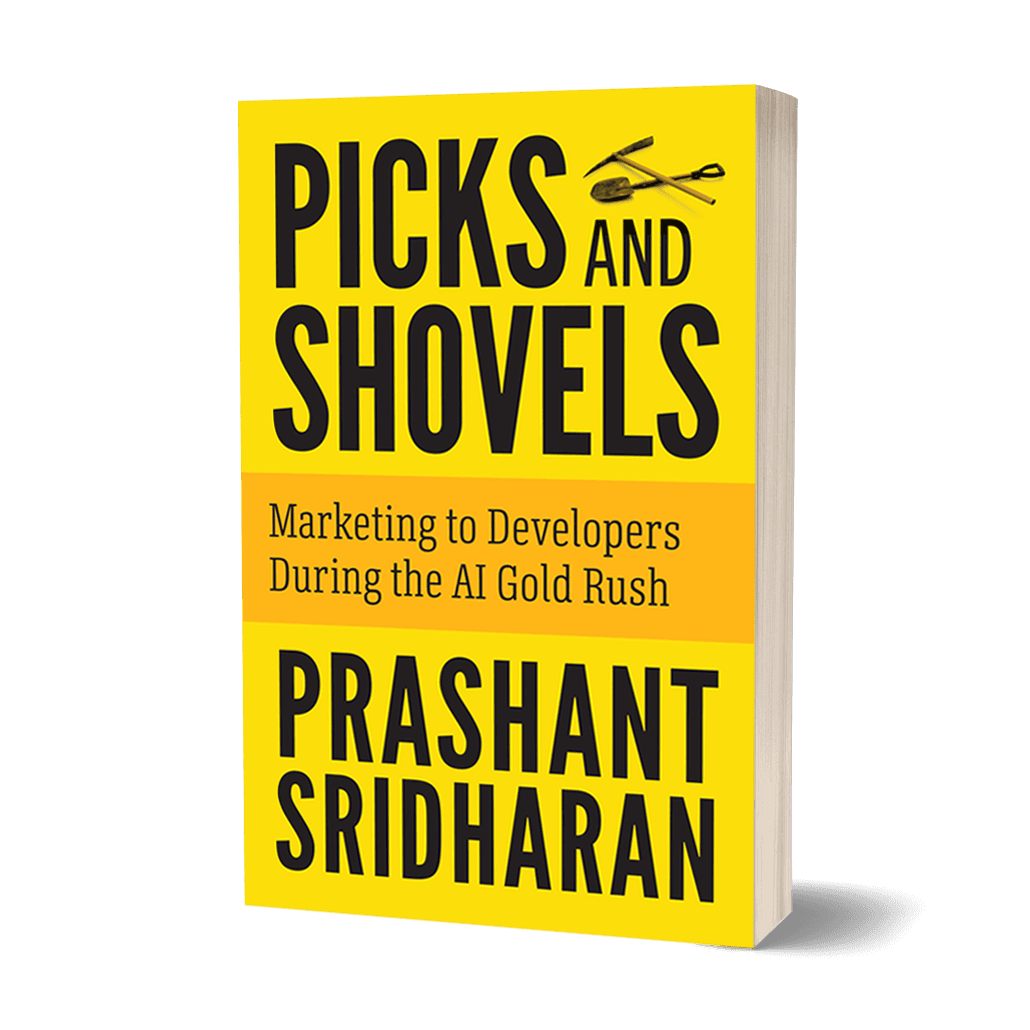
Developer marketing expert with 30+ years of experience at Sun Microsystems, Microsoft, AWS, Meta, Twitter, and Supabase. Author of Picks and Shovels, the Amazon #1 bestseller on developer marketing.
Want the complete playbook?
Picks and Shovels is the definitive guide to developer marketing. Amazon #1 bestseller with practical strategies from 30 years of marketing to developers.