Narrative
NAR-uh-tiv
The overarching story a company tells about the market, the problem, and its role in solving it. Bigger than a pitch. It is a worldview.
A narrative is the story your company tells about the world. Not about your product. About the world your product exists in. The market is shifting in this direction. This creates a problem. That problem will get worse. Our approach is the right response.
Andy Raskin wrote the definitive framework for strategic narratives. Start with a shift in the world that creates stakes. Name the enemy (the old way of doing things). Show what the promised land looks like. Explain how your product gets customers there. Provide proof.
The narrative is what makes a company interesting. Products are compared on features. Narratives are compared on vision. Stripe's narrative is about increasing the GDP of the internet. That is bigger than any payment API feature. When a company has a strong narrative, everything else (positioning, messaging, campaigns) flows from it.
Examples
A developer tools company builds a narrative.
The shift: software is eating the world, but deploying software is still painful and risky. The enemy: manual deployment processes that cause outages and slow teams down. The promised land: every developer deploys to production confidently, multiple times a day. The product: the platform that makes that possible.
A narrative drives a conference keynote.
The CEO opens with the industry shift. Spends 10 minutes on why the old way is broken. Shows customer stories of the new way working. Introduces new product features in the context of the narrative. The audience remembers the story, not the features.
A weak narrative undermines marketing.
The company's narrative is 'we make deployment easier.' That is a feature benefit, not a narrative. There is no shift, no enemy, no vision. Marketing campaigns feel disconnected because there is no story to anchor them to.
In practice
Read more on the blog
Frequently asked questions
What is the difference between a narrative and positioning?
Positioning defines your product relative to alternatives. A narrative tells a story about the world that makes your product inevitable. Positioning is 'what we are.' A narrative is 'why we exist.' The narrative is larger than any product. It is the company's reason for being.
Who should own the company narrative?
The CEO, with input from marketing. The narrative reflects the company's worldview and strategic direction. Marketing refines and amplifies it, but the vision must come from leadership. A narrative created by committee sounds like it was created by committee.
Related terms
How you define what your product is, who it is for, and why it is different from alternatives. The foundation of every marketing decision.
The specific words you use to communicate your positioning to different audiences. Positioning is singular. Messaging multiplies.
Defining an entirely new market category instead of competing in an existing one. High risk, high reward.
A clear statement of the specific benefit your product delivers to a specific customer. The reason someone buys.
Want the complete playbook?
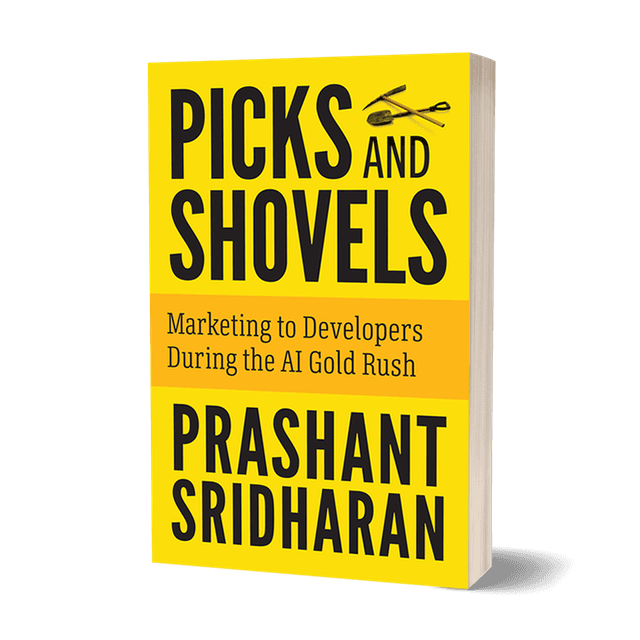
Picks and Shovels is the definitive guide to developer marketing. Amazon #1 bestseller with practical strategies from 30 years of marketing to developers.