Product-led growth
pee-el-JEE
A go-to-market strategy where the product itself drives acquisition, conversion, and expansion. Users try before they buy.
PLG is a go-to-market strategy where the product is the primary driver of customer acquisition, conversion, and expansion. Users sign up, try the product, experience value, and then buy. No sales conversation required for the initial purchase.
Slack, Figma, Notion, Datadog, and Vercel are PLG companies. Users adopt the product, love it, invite their team, and usage grows until someone needs to pay. By the time sales gets involved (if they do at all), the product has already proven its value.
PLG works when three conditions exist. The product delivers value quickly (fast time to value). Individual users can adopt without company-wide approval (bottom-up adoption). Usage naturally expands to teams and organizations (viral or collaborative mechanics). If your product requires a 6-month implementation and executive approval before delivering value, PLG is the wrong motion.
Examples
A PLG company's growth flywheel.
Developer signs up for free tier. Builds their first project in 10 minutes. Invites two teammates. The team outgrows the free tier after a month. The team lead upgrades to the paid plan with a credit card. No sales conversation happened. CAC: $12.
PLG with sales-assist for enterprise.
The product has 50,000 free users across 3,000 companies. The sales team identifies companies with 20+ free users and reaches out to propose an enterprise contract. These accounts close at 3x the rate of cold outbound because the product is already adopted.
PLG fails without fast time to value.
A data integration tool offers a free trial. But connecting data sources requires IT approval, security review, and two weeks of configuration. By the time the trial delivers value, most users have given up. The team introduces a sandbox with sample data to deliver value in minutes.
In practice
Read more on the blog
Frequently asked questions
What is the difference between PLG and sales-led growth?
In PLG, the product drives acquisition and conversion. Users try before they buy. In sales-led growth, a salesperson drives the process: demos, negotiations, and contracts. Many companies use both: PLG for SMB and self-serve, sales-led for enterprise. The motions are not mutually exclusive.
What metrics matter most for PLG?
Signup-to-activation rate, time to value, free-to-paid conversion rate, viral coefficient (how many new users each user invites), and product-qualified leads. Traditional marketing metrics like MQLs matter less because the product is the primary acquisition channel.
Related terms
A sales approach where product usage data identifies and qualifies sales opportunities from self-serve users.
A growth pattern where individual practitioners adopt a product first, and organizational purchasing follows after usage spreads.
A buying experience where customers sign up, configure, and pay without talking to a salesperson. Credit card in, product out.
A pricing model where the base product is free and revenue comes from paid upgrades. The dominant model in developer tools.
Time-limited access to a paid product. Users get full features for 7-30 days, then must pay or lose access.
Want the complete playbook?
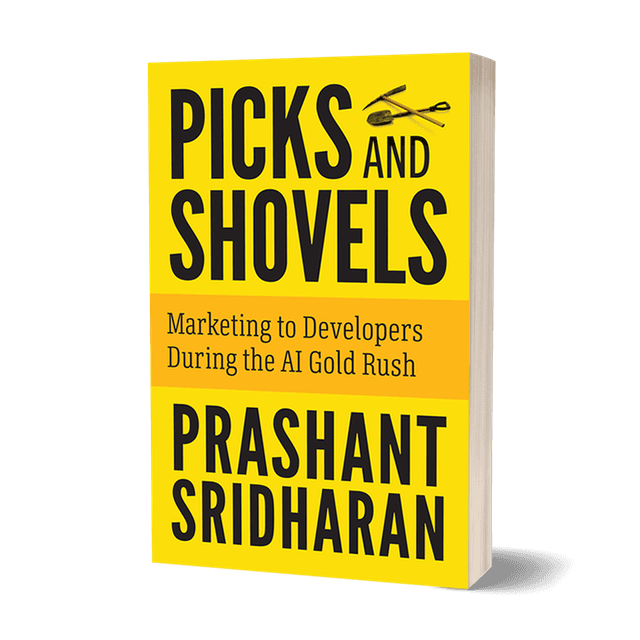
Picks and Shovels is the definitive guide to developer marketing. Amazon #1 bestseller with practical strategies from 30 years of marketing to developers.