Freemium
FREE-mee-um
A pricing model where the base product is free and revenue comes from paid upgrades. The dominant model in developer tools.
Freemium gives users a free tier with enough value to be useful, then charges for advanced features, higher limits, or team functionality. The free tier is not a free trial. It does not expire. Users can stay on free forever.
The model works because free users become advocates. They use your product at work, recommend it to colleagues, and eventually hit a limit that triggers a paid upgrade. Slack, GitHub, Figma, and Notion all grew this way. The free tier is your product-led growth engine.
The math is harsh. Typically 2-5% of free users convert to paid. That means you need massive free adoption to build a real business. If your product costs $50/month and 3% convert, you need 33 free users for every paying customer. The free tier must be cheap to serve, or you burn cash educating users who never pay.
Examples
A developer tools startup launches freemium.
Supabase offers a free tier with 500MB database storage, 1GB file storage, and 50,000 monthly active users. Developers build side projects for free. When they launch a real product and hit limits, they upgrade to the $25/month Pro plan.
Freemium drives enterprise adoption.
A developer uses GitHub's free tier for personal repos. They convince their team to try it. The team grows to 20 people and needs advanced permissions, code owners, and security scanning. The company upgrades to GitHub Enterprise at $21/user/month.
A freemium model fails.
A startup offers an unlimited free tier hoping to convert users later. Their infrastructure costs $0.50 per user per month. They get 100,000 free users and 1,000 paying customers at $10/month. Revenue: $10k/month. Free tier cost: $50k/month. They are losing $40k/month on free users who will never pay.
In practice
Read more on the blog
Frequently asked questions
What is a good freemium conversion rate?
2-5% is typical for developer tools. Slack converts around 30% of teams, which is exceptional. Dropbox converted around 4%. If your conversion rate is below 2%, your free tier either gives too much away or your paid tier does not add enough value.
Should I use freemium or free trial?
Freemium works best when your product has network effects or viral loops (Slack, Figma). Free trials work best when the value is immediately obvious and usage is predictable (Salesforce, HubSpot). Many companies use both: a permanent free tier plus a 14-day trial of paid features.
Related terms
Time-limited access to a paid product. Users get full features for 7-30 days, then must pay or lose access.
A go-to-market strategy where the product itself drives acquisition, conversion, and expansion through self-serve usage.
A buying experience where customers sign up, configure, and pay without talking to a salesperson. Credit card in, product out.
Restricting specific features to paid plans. The mechanism that turns free users into paying customers.
Charging customers based on how much they consume. Pay for what you use. The model behind Snowflake, Twilio, and AWS.
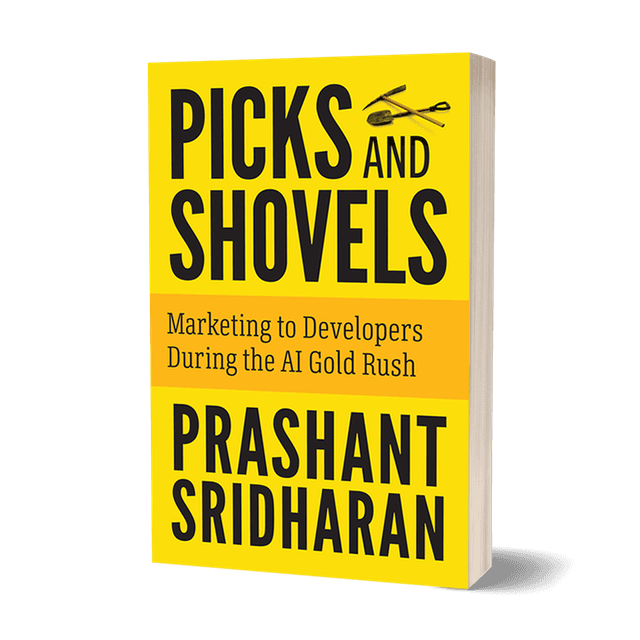
Want the complete playbook?
Picks and Shovels is the definitive guide to developer marketing. Amazon #1 bestseller with practical strategies from 30 years of marketing to developers.