Usage-based pricing
YOO-sij bayst PRY-sing
Charging customers based on how much they consume. Pay for what you use. The model behind Snowflake, Twilio, and AWS.
Usage-based pricing charges customers based on consumption: API calls, compute hours, data processed, messages sent, or storage used. You pay for what you use. Nothing more. The more you use, the more you pay.
This model aligns cost with value. A startup making 1,000 API calls pays a fraction of what an enterprise making 10 million calls pays. Both feel the price is fair because it scales with their business. Twilio charges per SMS. Snowflake charges per compute credit. AWS charges per everything.
The challenge is revenue predictability. A subscription company knows its ARR. A usage-based company's revenue fluctuates with customer consumption. If a customer's business slows down, their bill shrinks automatically. No cancellation needed. This makes forecasting harder and can spook investors who want predictable growth curves.
Examples
An API company charges per request.
Twilio charges $0.0079 per SMS message. A startup sending 10,000 messages per month pays $79. An enterprise sending 10 million messages per month pays $79,000. Same API, same product, vastly different revenue.
A data platform charges per compute.
Snowflake charges per compute credit consumed. A customer runs a complex query that takes 10 minutes on a Large warehouse. That costs roughly $4. They can scale down to save money or scale up for speed. The bill reflects actual usage, not a flat monthly rate.
Usage-based pricing creates expansion revenue.
A customer starts using Datadog to monitor 10 hosts at $15/host/month ($150). As their infrastructure grows to 200 hosts, their bill grows to $3,000/month automatically. No upsell conversation needed. No new contract. Revenue expands with the customer's growth.
In practice
Read more on the blog
Frequently asked questions
Is usage-based pricing better than subscriptions?
Neither is universally better. Usage-based works when consumption correlates with value delivered (APIs, compute, storage). Subscriptions work when value is consistent regardless of usage (CRM, project management). Many companies use hybrid models: a base subscription plus usage-based overage charges.
How do you forecast revenue with usage-based pricing?
Track committed minimum contracts, consumption trends by cohort, and seasonal patterns. Snowflake reports Remaining Performance Obligations (RPO) to show contracted future revenue. Most mature usage-based companies have 80%+ of revenue on committed contracts with usage above the minimums.
Related terms
A pricing structure where revenue scales directly with customer usage. Broader than usage-based pricing, it includes credits and commitments.
Tracking and measuring customer usage in real time for billing purposes. The plumbing that makes usage-based pricing work.
Charging per user who has access to the product. Simple to understand, easy to predict, but increasingly challenged by AI.
A virtual currency customers buy upfront and spend as they use your product. The bridge between subscriptions and pure usage-based pricing.
The annualized value of your active subscription contracts. The heartbeat metric of every SaaS business.
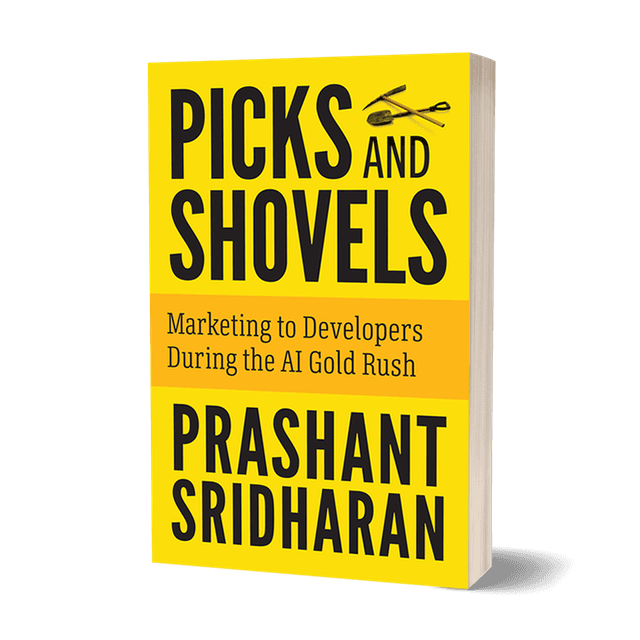
Want the complete playbook?
Picks and Shovels is the definitive guide to developer marketing. Amazon #1 bestseller with practical strategies from 30 years of marketing to developers.