Seat-based pricing
seet bayst PRY-sing
Charging per user who has access to the product. Simple to understand, easy to predict, but increasingly challenged by AI.
Seat-based pricing charges a fixed amount per user per month. Ten users at $20/seat/month costs $200/month. Add five more users and the bill jumps to $300. Simple math. Predictable revenue.
This model dominated SaaS for two decades because it is easy for buyers to understand and easy for sellers to forecast. Salesforce, Slack, Jira, Figma, and thousands of other products use seat-based pricing. Finance teams love it because they can budget exactly: headcount times price per seat.
The model is under pressure from two directions. First, usage-based pricing better aligns cost with value for products where usage varies widely across users. Second, AI is making individual users dramatically more productive, which means fewer seats are needed to get the same work done. If AI lets one developer do the work of three, seat-based pricing cuts your revenue by two-thirds.
Examples
A startup buys a project management tool.
Linear charges $8/user/month for their standard plan. A 15-person engineering team costs $120/month. When they hire 5 more engineers, the bill automatically increases to $160/month. No contract renegotiation needed.
Seat-based pricing creates procurement friction.
A 500-person company evaluates Figma at $15/editor/month. Finance calculates $90,000/year for all designers, product managers, and engineers who need editor access. They negotiate a volume discount to $12/seat, bringing the cost to $72,000/year.
Seat-based pricing backfires with AI.
A company has 50 customer support agents using Zendesk at $55/seat/month ($33,000/year). They deploy an AI agent that handles 60% of tickets. They now need only 20 human agents. Zendesk revenue drops from $33,000 to $13,200/year. Same value delivered, less revenue captured.
In practice
Read more on the blog
Frequently asked questions
What is the difference between a seat and a user?
In most products, they are the same: one seat equals one user account. Some products distinguish between active users (who pay) and viewers (who are free). Figma charges for editors but lets unlimited viewers access files for free. This reduces friction for adoption while still capturing revenue from power users.
Is seat-based pricing dying?
Not dying, but evolving. Pure seat-based pricing is losing ground to hybrid models that combine a base per-seat charge with usage-based components. As AI makes individual users more productive, products that charge purely per-seat risk revenue contraction even as customer value increases.
Related terms
Charging customers based on how much they consume. Pay for what you use. The model behind Snowflake, Twilio, and AWS.
Offering multiple pricing plans at different price points, each with more features or higher limits. The classic Good/Better/Best model.
How you bundle features into plans and tiers. Which features go in which plan at which price. The architecture of your pricing page.
The annualized value of your active subscription contracts. The heartbeat metric of every SaaS business.
Want the complete playbook?
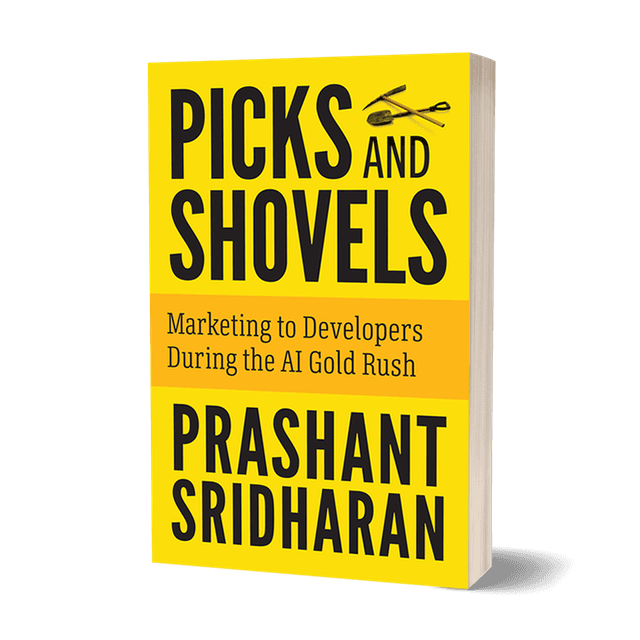
Picks and Shovels is the definitive guide to developer marketing. Amazon #1 bestseller with practical strategies from 30 years of marketing to developers.