Product-led growth
PROD-ukt led grohth
A go-to-market strategy where the product itself drives acquisition, conversion, and expansion through self-serve usage.
Product-led growth is a GTM strategy where the product is the primary driver of customer acquisition, conversion, and expansion. Users sign up, try the product, get value, and upgrade on their own. The product does the selling.
Slack, Figma, Notion, and Datadog all grew this way. A developer or team member starts using the product for free. They invite colleagues. Usage spreads. Eventually the company needs enterprise features (SSO, audit logs, admin controls) and upgrades to a paid plan. No sales call required for the initial adoption. This bottom-up adoption pattern is the engine behind most developer tools.
PLG does not mean no sales team. It means the sales team engages qualified users who already understand the product. This is fundamentally different from traditional sales-led growth where a buyer evaluates the product through demos and trials facilitated by a sales rep.
Examples
A developer tool offers a free tier.
Developers sign up, build a project, and deploy it. The product tracks usage. When a team exceeds the free tier limits, they see an upgrade prompt. 5% of free users convert to paid within 90 days without talking to sales.
A PLG company layers on sales-assisted motion.
The product identifies accounts with high usage and multiple team members. A sales rep reaches out to the team lead to discuss enterprise features. The conversation starts from a position of proven value, not a cold pitch.
A company measures PLG metrics.
The growth team tracks time to value (how fast new users get their first success), activation rate (what percentage reach the aha moment), and natural rate of conversion (how many free users upgrade without sales contact).
In practice
Read more on the blog
Frequently asked questions
Does product-led growth work for enterprise software?
Yes, but it usually needs a sales-assisted layer for large deals. Datadog, Snowflake, and Figma all started with PLG and added enterprise sales. The PLG motion generates qualified pipeline; sales closes the large contracts.
What is the difference between PLG and freemium?
Freemium is a pricing model (free tier + paid tiers). PLG is a go-to-market strategy where the product drives growth. PLG often uses freemium, but it also includes product-driven onboarding, viral mechanics, and usage-based expansion triggers.
Related terms
A go-to-market strategy where the sales team drives customer acquisition through outbound prospecting, demos, and direct engagement.
A growth pattern where individual practitioners adopt a product first, and organizational purchasing follows after usage spreads.
A buying experience where customers sign up, configure, and pay without talking to a salesperson. Credit card in, product out.
A pricing model where the base product is free and revenue comes from paid upgrades. The dominant model in developer tools.
A sales strategy where you start with a small deal or team and grow revenue within the account over time through expansion.
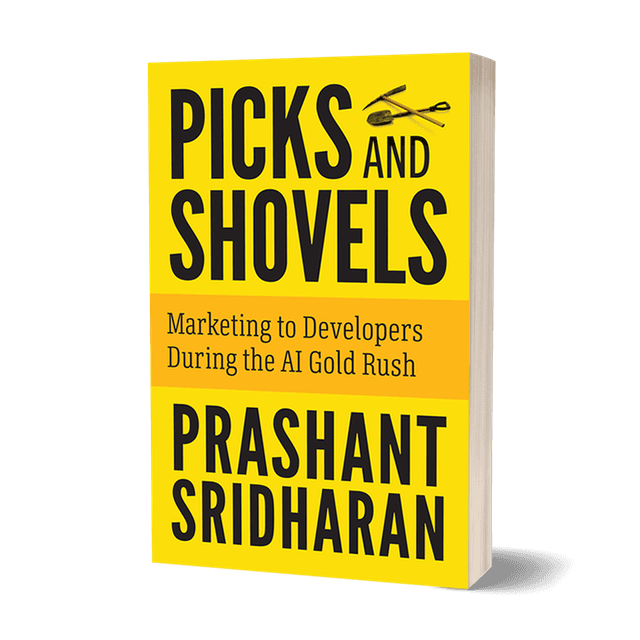
Want the complete playbook?
Picks and Shovels is the definitive guide to developer marketing. Amazon #1 bestseller with practical strategies from 30 years of marketing to developers.