Proprietary research is the only content moat left
AI can write your blog posts. It cannot run your surveys, analyze your data, or interview your customers. The last moat in content marketing is original insight.

Proprietary research is the only durable content moat left. AI can write a 2,000-word blog post in seconds, but it cannot run your survey, interview your customers, or analyze your platform data.
Every marketer on earth now has a button that spits out a finished blog post in less time than it takes to refill your coffee. And most of them are pressing it.
The result is predictable. Blog content volume is exploding. Engagement per post is declining. Merriam-Webster named "slop" its word of the year in 2025, a term that perfectly describes the flood of low-value, AI-generated content washing over the internet. Rand Fishkin at SparkToro put it bluntly in his 2026 marketing predictions: written content is now optimized for algorithms, not humans, and only 28% of B2B marketers were "web readers" in 2025, down from 56% in 2015.
There's so much content out there. And it's mostly irrelevant. Including this post!
So what kind of content can we build that still matters?
The answer is original data.
Why is there a content shock?
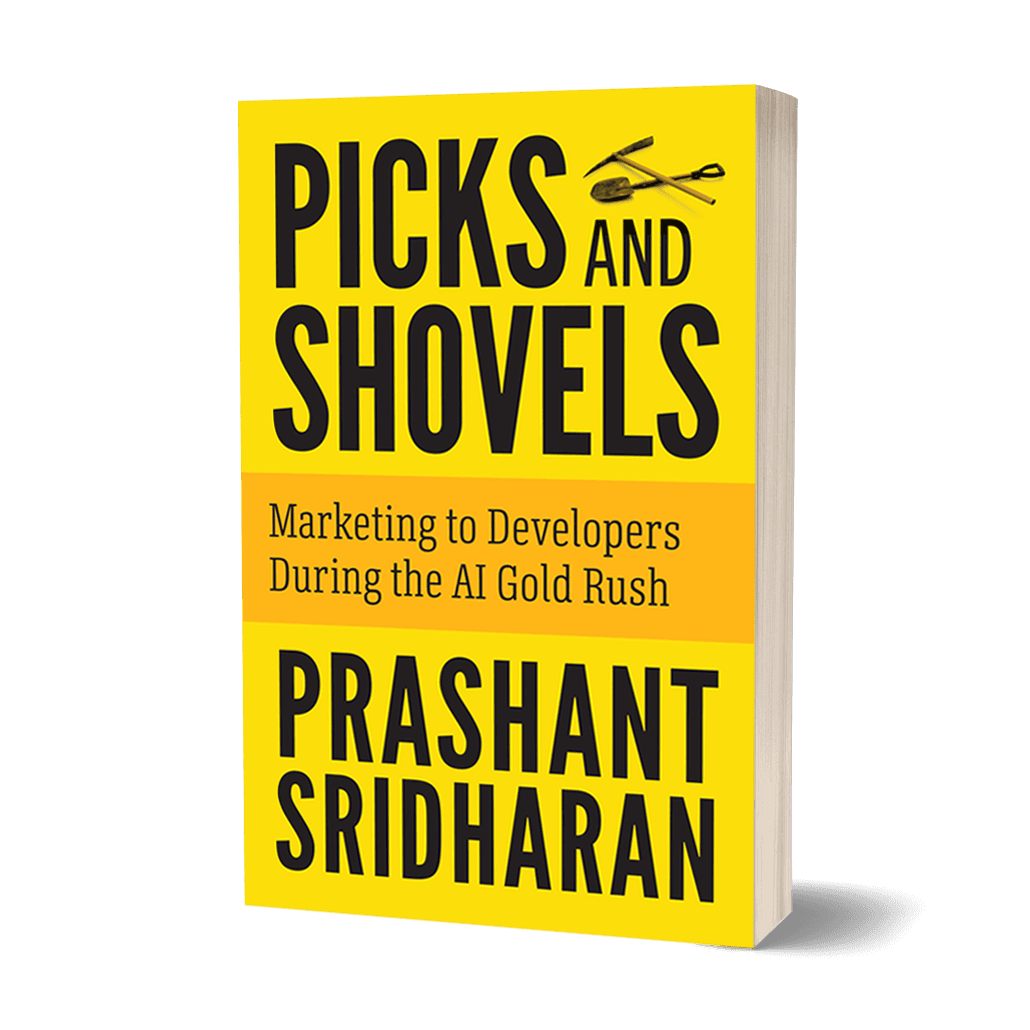
We publish faster than anyone can keep up with, and the gap between what gets written and what gets read keeps widening. In Picks and Shovels, I wrote about being "audacious" with content. About creating outside-in content that addresses matters of "great interest" to developers in your target market, not just inside-out content about your products. But to really stand out, you need something specific: data that nobody else has.
Consider a simple experiment. Go to ChatGPT or Claude right now and ask it to write a blog post about content marketing trends for developer tools in 2026. You will get a competent, well-structured, thoroughly mediocre article. It will hit the right keywords. It will mention the right companies. It will be indistinguishable from about 10,000 other posts already published on the same topic.
Now ask ChatGPT to tell you what percentage of developer tool companies increased their content budgets in Q4 2025. It cannot. That data does not exist in its training set because nobody ran that survey. Or if someone did, they have something nobody else has.
Original research is your moat.
What can AI not do for content marketing?
AI has specific, structural blind spots when it comes to content marketing.
AI can write a blog post in seconds. It cannot run a survey of 500 developers and analyze the results. It cannot interview your customers about why they chose your product over three alternatives. It cannot pull usage data from your platform and identify patterns nobody has seen before. It cannot sit in a sales call and hear the objection that changes your entire positioning (though, to be honest, it can analyze transcripts really well!).
AI is a synthesis engine. It recombines what already exists.
When I write about how to produce developer content, I talk about ideation coming from customer feedback, search data, competitive analysis, and team brainstorming. Original research is the most potent form of ideation because it produces the raw material that nobody else can write about.
Think about it from the AI's perspective for a moment. When someone asks an LLM "what percentage of developers use Kubernetes in production?", the model searches its training data for surveys and reports that contain that number. It cites the source. If your company ran that survey, you are the source. You get the citation, the backlink, and the authority.
What are some good examples of original research?
Original research takes many forms, but the best examples share one trait: they produce data nobody else has. Here are a few companies you can learn from (note: I created two of these):
- Stack Overflow Developer Survey: Over 49,000 responses across 177 countries. When anyone writes about what developers actually use, they cite this survey. Fifteen years running and it only gets more authoritative.
- Supabase State of Startups: Over 2,000 founders surveyed on tech stacks, go-to-market, and AI adoption. Supabase turned their community into a data asset.
- Timescale State of Postgres: The definitive annual survey on PostgreSQL usage, adoption, and trends. Timescale does not sell a database survey. They sell a database. The survey makes them the authority.
- State of Developer Relations: Eleven years of annual data on DevRel compensation, team structures, and priorities. Good data that nobody else has.
As you think about your business, what unique insight do you have that nobody else does? Riff off that to determine the topic area for your research. Sure, the obvious ones are solid: "We're a Postgres company, let's survey people about Postgres." There's nothing wrong with the obvious route. But you can also think about your ICP. What insight do you have about their workflows, frustrations, pain points, and so on? These are all great fodder for original research.
What is a good framework for building your research practice?
Building a research practice does not require a dedicated team or a massive budget. You have a few good options for generating the data you need to publish original research:
- Surveys: You can create a survey with a tool like Typeform or Google Forms. You can then analyze the responses with a tool like Google Sheets or Excel.
- Interviews: You can interview your customers or users with a tool like Zoom or Google Meet. You can then transcribe the interviews and analyze the transcripts with a tool like Google Docs or Microsoft Word.
- Platform data: You can analyze your platform data with a tool like Google Analytics or Mixpanel. You can use an LLM to synthesize and turn your sales transcripts into qualitative insights.
- Customer feedback: You can collect customer feedback with a tool like Customer.io or Zendesk.
Not every company has a research team or a survey budget. You do not need one to start. I recommend starting with what you already have.
How does proprietary research fit your content strategy?
Proprietary research will turbocharge your existing content strategy.
When I write about how to choose what developer content to build, I talk about matching content to the developer journey: awareness, consideration, activation, retention. Original research sits at the top of that funnel. It is the gravity that pulls new audiences in. But it also feeds every other piece of content you produce.
One survey can generate:
- The full research report (awareness, credibility)
- Five to ten blog posts that each drill into a specific finding (awareness, SEO)
- Social media posts quoting individual stats (distribution)
- A webinar walking through the findings (engagement)
- Sales enablement materials citing your own data (conversion)
- Newsletter content that gives subscribers exclusive early access (retention)
You will simultaneously produce better, more engaging content, but you'll also build a "web" of authority bolstered by your content output. It's a great flywheel, all based off one concerted content effort. Be sure to make your content AI-friendly, of course.
What should you do this quarter?
Stop writing commodity blog posts that contain nothing AI could not produce on its own. Start investing in content assets that require human effort: surveys, interviews, platform data analysis, and original findings.
A simple test. Before you publish anything, ask: "Could an AI have written this from existing sources?" If the answer is yes, it is not defensible. It might still be useful, but it is adding to the noise rather than building a moat.
If you are going to be audacious with content, and you should be, be audacious with data. Run the survey nobody else is running. Analyze the platform data nobody else has. Interview the customers nobody else is talking to. Publish the findings.
The companies that own original data have a durable advantage. Original insight is harder to commoditize than borrowed ideas.

Developer marketing expert with 30+ years of experience at Sun Microsystems, Microsoft, AWS, Meta, Twitter, and Supabase. Author of Picks and Shovels, the Amazon #1 bestseller on developer marketing.
Want the complete playbook?
Picks and Shovels is the definitive guide to developer marketing. Amazon #1 bestseller with practical strategies from 30 years of marketing to developers.