Developer content strategy: creating content developers actually read
Most developer content gets ignored. Here's how to create content that cuts through the noise, earns developer trust, and actually drives product adoption.

A developer content strategy that works starts with solving real problems, respects the reader's intelligence, and mixes inside-out content about your product with outside-in content about the problems your audience cares about. Everything else is decoration.
Developers are drowning in content. Every vendor has a blog. Every tool has documentation. Every conference produces hours of recorded talks. The result is an overwhelming flood of content competing for limited attention.
Most of this content fails. It's too promotional, too shallow, or too generic. Developers scroll past it without a second thought.
But some content breaks through. Stripe's engineering blog is read by developers who will never use Stripe. Supabase's YouTube channel has turned tutorials into a growth engine. Vercel's Next.js documentation is so good it serves as a template for the entire industry. These companies didn't build content programs by accident. They followed specific principles that separate content developers actually read from content they ignore.
Here's what I've learned about developer content strategy after thirty years and hundreds of campaigns.
What content do developers actually consume?
Not all content is equal. Through observation and data, I've identified the 12 types of content that work for developers. But understanding why these types work is even more important than knowing what they are.
Developer content succeeds when it:
Solves immediate problems. A developer searching "how to implement JWT authentication" needs an answer now. Content that provides that answer, with working code, wins.
Teaches something real. Developers want to improve their skills. Content that genuinely teaches, not just promotes, earns attention and respect.
Respects their intelligence. Developers can detect when content talks down to them or oversimplifies. Treat your audience as smart people who lack specific context, not as people who need everything explained slowly.
Provides specificity. Vague advice is worthless. Specific examples, real code, and concrete details are what developers need.
How do you build your content strategy?
Start with audience understanding
Before creating content, know who you're creating it for:
Who are they? Job titles, experience levels, technical contexts.
What do they care about? Problems they're solving, goals they're pursuing, skills they're developing.
Where do they spend time? Which communities, forums, social platforms, and publications do they read?
How do they learn? Do they prefer written tutorials, videos, interactive playgrounds, or something else?
I've written about identifying your ideal customer profile. Apply the same rigor to your content audience.
Understand inside-out vs. outside-in content
You'll have the opportunity to create two kinds of content. "Inside-out" content is about you and your products: launch posts, changelogs, video tutorials, documentation. This content is of interest to folks who are already in your camp.
"Outside-in" content takes matters of great interest to developers in your target market and provides historical context, summarization of the problem, discussion of solutions and alternatives, and ultimately information about what products or services you provide to address the matter.
Outside-in content will drive leads, while inside-out content will drive conversion and customer satisfaction. They're both essential, but for content marketing, outside-in content typically has the higher ceiling for new audience acquisition.
Define your content pillars
Content pillars are the major themes you'll consistently create content around. They should:
- Align with your product's value proposition
- Address your audience's key problems and interests
- Be broad enough to sustain ongoing content
- Be specific enough to establish expertise
For a database company, pillars might be:
- Query optimization and performance
- Data modeling best practices
- Migration and integration patterns
- Scaling and reliability
For an AI platform, pillars might be:
- Model training and fine-tuning
- Prompt engineering techniques
- Production deployment patterns
- Responsible AI practices
Three to five pillars is typically the right number. Enough for variety, few enough for focus.
Map content to the developer journey
Different content serves different purposes in the developer journey:
Awareness stage: Content that introduces concepts and establishes expertise
- Thought leadership and industry analysis
- Trend pieces and predictions
- Comparison guides and market overviews
Consideration stage: Content that helps developers evaluate your product
- Feature breakdowns
- Competitive comparisons
- Architecture documentation
- Use case examples
Activation stage: Content that helps developers get started
- Quick start guides
- Tutorials and walkthroughs
- Code samples and templates
- Migration guides
Retention stage: Content that helps developers succeed long-term
- Advanced tutorials
- Best practices guides
- Performance optimization
- Troubleshooting guides
Most content strategies over-invest in awareness and under-invest in activation and retention. Balance matters.
Establish quality standards
What does "good" look like for your content? Document this explicitly:
Technical accuracy: All code must be tested and working. All technical claims must be verified.
Completeness: Tutorials should include all steps. Readers shouldn't have to guess at missing information.
Clarity: Complex topics should be explained clearly, with examples.
Timeliness: Content should reflect current product versions and best practices.
Voice and tone: Define how your content should sound. Conversational? Technical? Formal?
Having written standards allows content to be reviewed objectively and helps maintain consistency across creators.
Content production
Who creates content?
Developer content can come from multiple sources:
Developer advocates: Often the primary content creators. They combine technical expertise with communication skills.
Engineers: Have deep technical knowledge but may need support with writing and structure.
Technical writers: Excel at clarity and completeness. May need subject matter expert support.
External contributors: Guest posts, community contributions, and freelancers.
The best content programs use multiple sources while maintaining consistent quality standards.
Content production workflow
I've written about how to produce developer content in detail. The key elements:
Ideation: Where do content ideas come from? Customer feedback, search data, competitive analysis, and team brainstorming.
Briefs: Every piece of content should start with a clear brief specifying audience, goal, key points, and success metrics.
Creation: Actual writing, coding, recording, or designing.
Review: Technical accuracy review and editorial review.
Publication: Formatting, SEO optimization, and publishing.
Distribution: Getting content in front of the right audience.
Measurement: Tracking performance and learning.
Content calendar
A content calendar brings predictability to content production:
- What content is being produced this quarter/month/week?
- Who is responsible for each piece?
- What's the status of each piece?
- Are we aligned with product launches and events?
I recommend planning content quarterly while leaving room for responsive content to timely events.
Distribution strategy
Creating great content is only half the battle. You also need to get it in front of developers.
Owned channels
Your blog: The primary home for content you own. Invest in SEO so it's discoverable long-term.
Documentation: Don't think of docs as separate from content marketing. Docs are content that gets read repeatedly.
Email newsletter: Build a list of developers who want to hear from you. Respect their inbox.
Social media accounts: Primarily Twitter/X for developers, LinkedIn for enterprise.
Earned channels
Community platforms: dev.to, Hashnode, and similar platforms have built-in audiences. Cross-post there (with canonical links).
Social sharing: Make content worth sharing. Include shareable takeaways, graphics, and quotable points. (Need to clean up a logo or generate favicons quickly? Try Image Transform.)
Syndication: Some publications accept syndicated content from vendors if it meets their quality standards.
Word of mouth: The most valuable distribution channel. Content worth talking about gets talked about.
Paid distribution
Paid promotion can accelerate content reach:
- Promoted posts on social platforms
- Sponsored newsletters
- Content recommendation platforms
- Event sponsorships
Paid works best for promoting genuinely valuable content. Paying to push mediocre content is a waste.
How do you measure content performance?
What metrics indicate content success?
Consumption metrics
- Page views and unique visitors
- Time on page
- Scroll depth
- Video watch time
- Return visitors
These tell you if developers are consuming your content.
Engagement metrics
- Social shares
- Comments
- Newsletter signups from content
- Content downloads
These tell you if content resonates enough to take action.
Conversion metrics
- Signups attributed to content
- Documentation traffic leading to product usage
- Content-influenced pipeline
- Tutorial completion to product activation
These tell you if content drives business outcomes.
Quality metrics
- Developer feedback (qualitative)
- Content accuracy issues identified
- Update frequency needed
These tell you if you're maintaining standards.
Don't obsess over any single metric. Build a dashboard that tells a complete story about content performance.
Common content strategy mistakes
Mistake 1: All content, no documentation
Some companies invest heavily in blog content while their documentation languishes. This is backwards. Documentation is where developers spend most of their time.
Mistake 2: Quantity over quality
Publishing daily mediocre content is worse than publishing weekly excellent content. Developers remember the bad pieces.
Mistake 3: No distribution plan
Great content that nobody sees is wasted effort. Distribution should be part of every content plan.
Mistake 4: Ignoring SEO
Search is how most developers discover content. Basic SEO, good titles, clear structure, relevant keywords, makes a significant difference.
Mistake 5: Too promotional
Every piece doesn't need to sell your product. Educational content that builds trust is more valuable long-term than promotional content that gets ignored.
Mistake 6: Not updating old content
Content degrades over time. Code examples break. Best practices evolve. Invest in maintaining your content library, not just adding to it.
The bigger picture
Content strategy for developers isn't fundamentally different from good content strategy for any technical audience. It requires:
- Deep understanding of your audience
- Commitment to quality
- Systematic production processes
- Thoughtful distribution
- Continuous measurement and improvement
What makes it distinct is the audience. Developers are skeptical, technically sophisticated, and have infinite alternatives for their attention. You earn their trust through what I call "Help First": genuinely prioritizing developer success over your own business outcomes, trusting that the business results will follow.
Build a content strategy around Help First, and the marketing outcomes follow naturally.
For more on developer content strategy and developer marketing broadly, I've written extensively in Picks and Shovels: Marketing to Developers During the AI Gold Rush. It covers content strategy alongside positioning, community, measurement, and more.

Developer marketing expert with 30+ years of experience at Sun Microsystems, Microsoft, AWS, Meta, Twitter, and Supabase. Author of Picks and Shovels, the Amazon #1 bestseller on developer marketing.
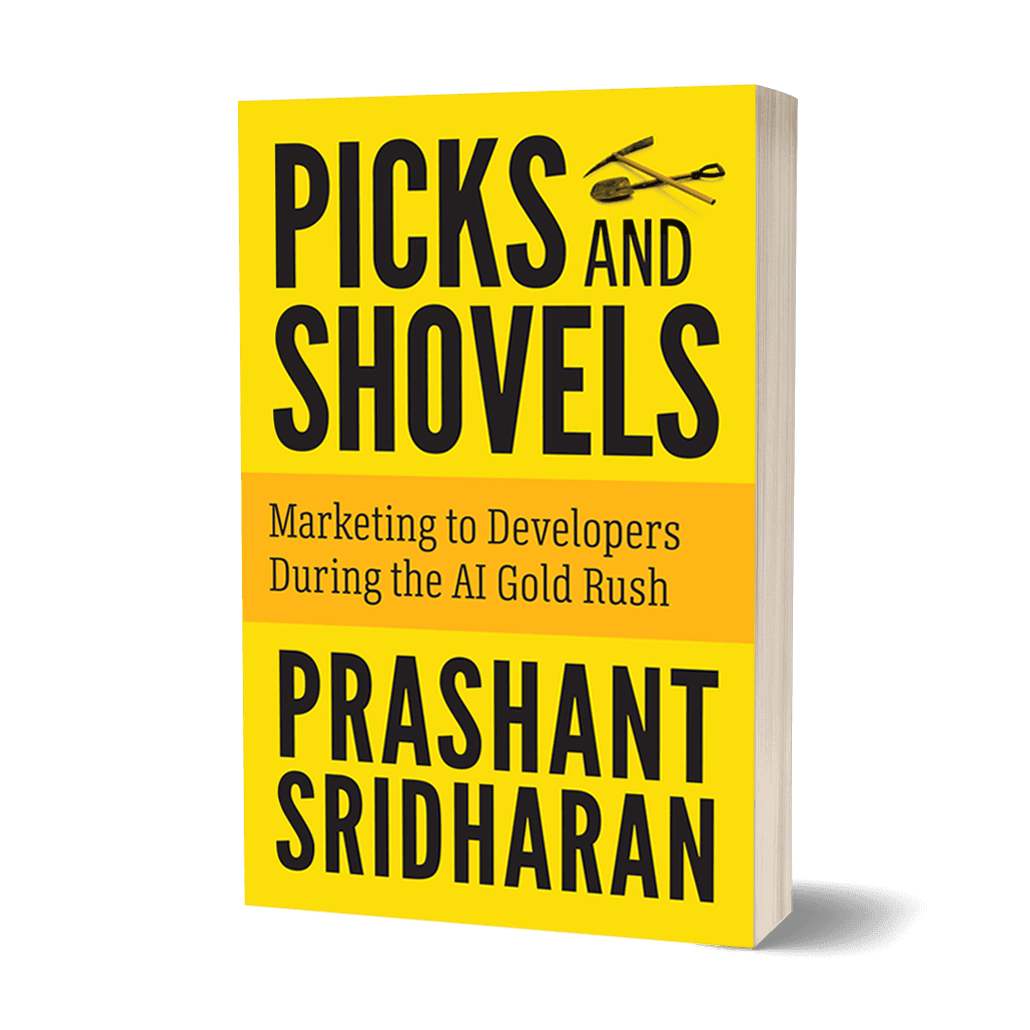
Want the complete playbook?
Picks and Shovels is the definitive guide to developer marketing. Amazon #1 bestseller with practical strategies from 30 years of marketing to developers.