What developer events are actually for
Every year somebody asks whether the event budget is worth it, and every year it is argued with the wrong numbers. The case got stronger this year.
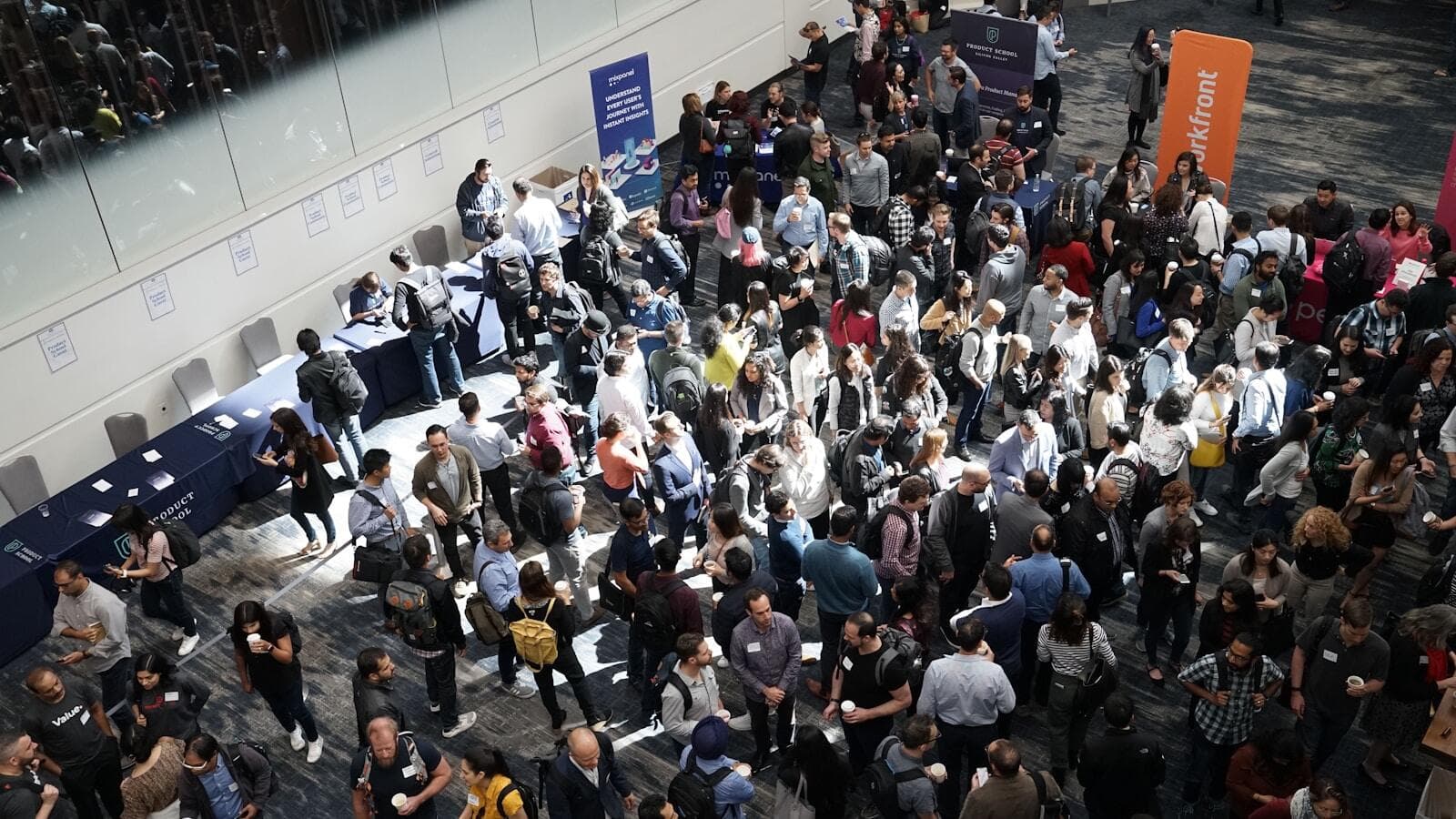
So why do people put themselves through this every single year and do major developer events? Why go through all the expense and hassle and time out of the office to set up a booth at AWS re:Invent? Why put the entire organization through the stress and the rush of getting a user conference up and running?
The big reason why events matter
There are a few reasons why organizations do this. First, they think about pipeline generation. Going to an event where your ideal customer profile is in attendance usually will mean that you'll be able to find potential customers, let them know about your product, and get them engaged with your sales team.
I often think about pipeline generation as a consequence of what is often overlooked as the greatest benefit of events. Events build community.
It was always the case that you would go to events to meet your community, to touch them in the flesh, and to hear from them what their biggest concerns are. Early in my career, when I was a peon who didn't have much say in anything, I was sent to go work the booth at Comdex, which was the biggest conference in the industry at the time. The opportunity to meet customers and debug even their smallest issues gave me a lot of empathy that I was able to bring back to the office and build upon. Remember, those were the days before you were able to monitor forums or participate in Slack threads or go to a Discord.
Connecting with your community in the real world is perhaps even more important today. As I've written before, everything is fake, and when you're online, you can't tell if what you're interacting with is authentic or not. When you go to an event and you meet someone who works at a company that you admire or whose product you use every day, you have an opportunity to connect with them on a personal level. Let me tell you, this matters.
Are you willing to invest in events the right way?
Now, events are complicated, and planning for events is an extraordinary effort. If you have a strong field marketing team, like I've been fortunate to have in my career, you will have someone who can handle the logistics, can build the systems that measure pipeline generation and growth, and who can run the event flawlessly and execute the post-mortem effectively.
Field marketers are the unsung heroes of your marketing team. A lot of times, they live out of suitcases for weeks at a time, they work weekends and holidays without complaint, and they are natural systems thinkers.
Even if you're a small team, a highly competent and collaborative events marketer can make a huge difference in whether you get the most out of your event budget. Don't think of them as event planners. Think of them as the tip of the spear in your customer engagement. As my hypothesis goes with events, you are investing in an opportunity to cut through the bullshit of AI and get to your customers at a visceral level. Your field marketing and events team are your partners, not your gophers.
Bring the right people on board to help you execute your events program. Don't wing it.
How do you choose which events to attend?
I've covered the mechanics of how to execute events in a previous post, and a lot of those lessons still apply. In fact, they're even more important in the AI era as we look for opportunities to connect with people on a real level.
The big question is: which events are the ones that matter? When you look at the landscape of events, how do you choose the right one?
This week alone, I received over 60 opportunities to sponsor a hackathon. All of them are in far-flung countries and regions, and the hackathons themselves are somewhere between 80 and 250 people. From a numbers perspective, they look appropriate.
At the same time, this week I received five opportunities to sponsor a major event. All of these events look fairly good, and all of them will cost me about $50,000 in sponsorship fees, to say nothing of booth buildouts, travel and entertainment expenses, as well as time out of the office.
So you have two different types of events, and with them, two different sides of the cost and benefit equation.
For the lower-tier events, things like hackathons and meetups, the first thing I evaluate is whether there is an opportunity for us to have an impact on that event without having to send people. Typically, this means things like offering credits or prizes in the case of hackathons. In many cases, a hackathon organizer is more than willing to take a bunch of stickers and some credits to offer as prizes. If your company is a well-known brand, they'd also welcome the opportunity to put your logo on their hackathon for promotional purposes. Generally speaking, depending on the quality of your own brand, you can get away with a minimal level of participation with hackathons.
But all hackathons are not equal, and you could go crazy trying to sponsor all of them. There are literally hundreds of hackathons in the world at any given moment. For me, choosing the right one comes down to geography and opportunity. I'll take hackathons at Stanford or MIT over hackathons at other universities around the world. It's a pure numbers game, and it has nothing to do with the quality of graduate. I'll also take hackathons that are closely scoped, for example, a hackathon about building agents in a weekend (a topic that is really hot right now, as of this writing.)
The higher tier events, the calculus is quite different. These are events that cost a lot of money, require a ton of effort, and whose impact could be outsized. Events like AWS re:Invent, Google Cloud Next, or Microsoft Build give you an opportunity to meet potential buyers. Not just customers, buyers. This is where pipeline generation is huge.
Beyond the obvious hyperscaler events, though, there is a second level of top-tier events: things like KubeCon, various Postgres events, and more. These events are equally as expensive and appeal to a more technical audience. The audience that attends KubeCon is quite different than the audience that attends re:Invent. Both events are valuable for pipeline generation, but whether you get the most out of it will depend on how well you execute.
Preparing for the event
The most important thing that I learned at Amazon was the phrase "start with the customer and work backwards."
This phrase applies to product design. It applies to marketing, and it definitely applies to how you prepare for an event.
At KubeCon, I would make sure that there is technical information at the booth, that there are technical people staffing the booth, and that any ancillary events or co-marketing that we do at the event will appeal to the technical buyer. In my post about how to execute an event, we talked about running a raffle at your booth. Think about the prize that you would offer as a coupon. It should be something that would appeal to a technical user.
The opposite would be the case for re:Invent. The type of customer that attends re:Invent tends to be more of a decision maker, a buyer. At re:Invent, the prize for the raffle would be different. The signage in the booth would be different. The collateral in the booth would be different, and even the staff working the booth would be different.
Your mission at these events is to get the customers who attend to come to your booth, to learn why your product matters, and to engage with your sales team to continue the conversation. That's it. That's the goal. So build your plan around knowing who the customer is, what would motivate them to stop and engage with your team, and what would make you memorable and stand out in the post-event communication.
Why the case for events got stronger
A lot of the things that I've covered so far have been the same for events for the entire 35 years I've been in this business. The signage may change and the brands may change, but this process and the consideration are the same. There is one thing that's very different today, and that is AI.
Everything that can be generated online is now suspect. A blog post proves nothing. A case study proves nothing. Developers have spent a year being handed fluent, competent, hollow material, and they've adjusted their defaults accordingly.
To quote the legendary NFL agent, Jerry Maguire, "Show me the money."
Nobody can fake a conversation. When you stand in a room and answer a hard question badly in real time in front of somebody who already knows the domain better than you, it's a signal that can't be faked. At the same time, if you have a great conversation and you learn something and you come away thinking, "Wow, this company is full of cool people who build amazing products," that also can't be faked.
Events are now the single most important thing we have at our disposal in order to cut through the fakery.
I have spent my entire career suspicious of events, but right now, in this moment, in this era, I am a big believer in them. I think you invest in events and meetups, and you invest in community. You invest in cutting through the bullshit and building real connection and trust.
Other types of events
I haven't covered events such as webinars or virtual events in this post. I think those are different and special cases. I think they are still opportunities to build connection and community, but they're not as deep as in-person for obvious reasons.
I'll cover webinars and virtual events in a future post.
For now, I think the great opportunity for all of us is to invest in physical events and capture this moment where everyone is craving human connection. The swirl of nonsense and AI-generated content is overwhelming, and for this reason I think people seek a respite from it all.
What to cut
Look, there are a lot of events to choose from, and I think your biggest problem is going to be balancing your budget with those opportunities. The thing I would say is that you need to keep your head on the swivel because most events are probably not worth it, and most events are probably time and money sinks.
But finding the right events that match your ideal customer profile and building a tailored event program that matches the customer is a very strong way to build and maintain community. And right now, community is the durable asset that will survive the AI era.

Developer marketing expert with 30+ years at Sun Microsystems, Microsoft, AWS, Meta, Twitter, and Supabase. Author of Picks and Shovels, the Amazon #1 bestseller on developer marketing.