Everything's fake
You can't tell who's real anymore. The person on the other end could be a dog, a cat, a robot, or a human. The thing that's still expensive is a handshake.
Everything's fake. Everything on the internet is fake. You can't tell who's real. The person on the other end could be a dog, a cat, a robot, or it could be a human. The videos you see on social media are mostly produced by AI bots now. The content you see on LinkedIn is all fabricated by AI.
When content generation got free, all the content became inexpensive. Blog posts are cheap to fake. Reviews and testimonials are cheap to fake. Conference abstracts are cheap to fake. Support responses are cheap to fake. I had a support interaction today where I went back and forth on an email with a bot that kept telling me that I was wrong. In the end, I wasn't escalated to a human, and I still don't have an answer to my problem. Absolutely infuriating.
But the thing that's still expensive is, believe it or not, a handshake or a hug.
What can't be faked
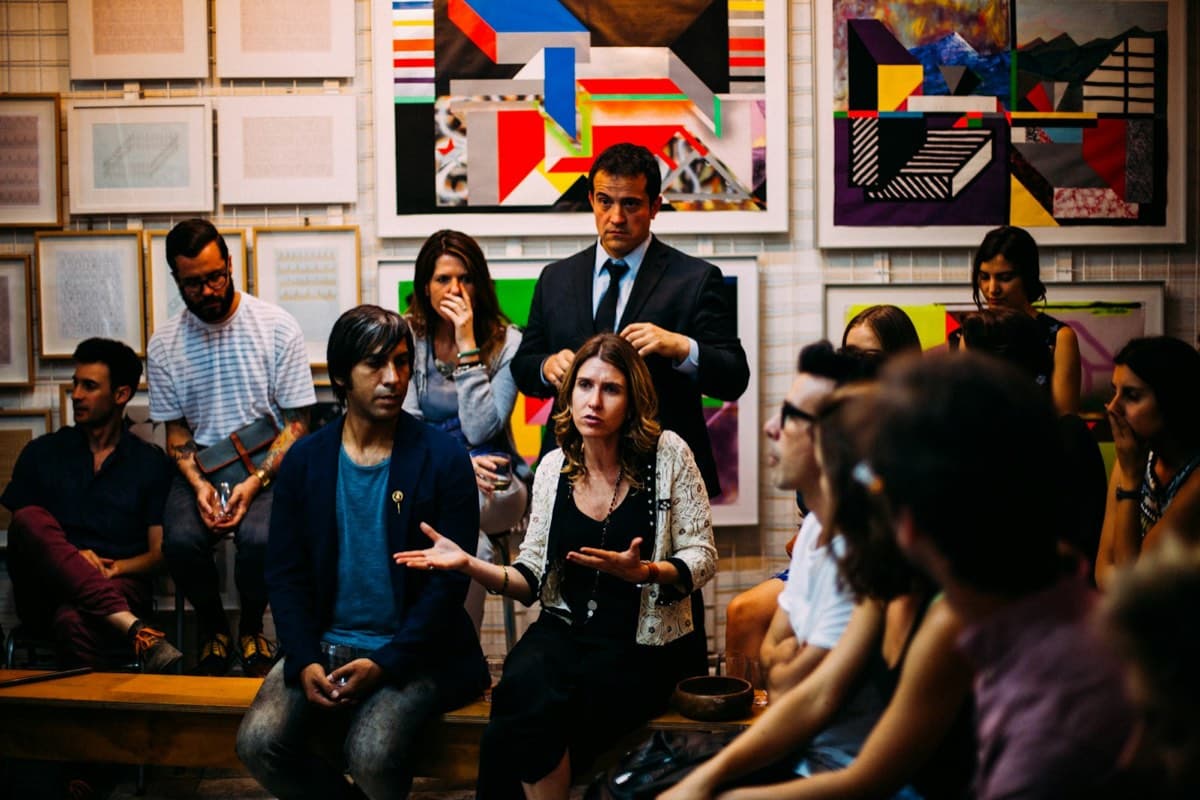
Being in person matters. It can't be faked when you show up in a room. It can't be faked when you ship something and do a live demo in front of real people. It can't be faked when you are negotiating a deal in person. These kinds of moments and interactions are increasingly fleeting, which is precisely what makes them so important now.
Online, we are always distracted. We post on Twitter while we're in a Zoom. We scroll Instagram while we are in standup. We are doing four things in six different windows and aren't able to concentrate on any of them. This is all a consequence of our massively AI-fueled world, where the number of worktrees you have going in parallel is a badge of honor.
But when you're in person, you have to focus on the other individual. You have to look them in the eye and listen to them. You have to provide physical cues that you understand what the other person is saying so that the other person can then move on to the next topic. This is what it means to be human. As amazing and as incredible as AI is, it can't do these things that we crave and need every single day. There are no edit buttons. There are no retakes. There is no AI to clean up your verbiage. You've got to do it right the first time.
My love-hate relationship with events
In the past, I have had a love-hate relationship with events. I used to think trade shows were a big time suck. And for the most part, they are. You are going to spend a lot of energy and a lot of time preparing for a trade show. The logistics challenges are one thing. The product marketing challenge is another thing. And the sales and GTM training aspects are yet another thing. On top of that, there may even be a partnerships angle to consider.
Through it all, your corporate bean counters are going to be judging you and putting you on notice about the importance of ROI. Your leadership is going to be breathing down your neck about every aspect of execution. And in all likelihood, your sales team is going to be looking to you to drive pipeline out of the event.
Every AWS re:Invent is a few years off my soul and a splotch of grey hair on my head.
Now, you could certainly show up to a trade show and have a booth and put some perfunctory text on the wall, but that's not going to perform. To perform well at a trade show requires a significant amount of effort.
And somehow, "little" trade shows are even more complicated than the big ones. The show organizers tend to be more disorganized. The other vendors tend to be more needy. Things get lost more frequently. The T-shirts you sent to the booth were sent to the wrong conference center or the wrong hotel. Now you're hunting down tracking numbers when you should be assembling the booth. Events are all chaos, but somehow some are more chaotic than others.
But the thing is that you have to do things that don't scale. Events are hard. Events are complicated and events are messy, but events give you opportunities to meet customers, to meet partners, to further relationships, and to kick off deals and negotiations. In short, events are where the magic happens because that's where people meet one another and do all the messy things that people are known for.
Supporting your sales teams with events
Another kind of in-person gathering that I find incredibly valuable is customer dinners. You get 10 to 15 of your top customers in a room, and you get the sales team together with them, as well as your top engineers and leadership. There are no slides or presentations. From there, they have real conversations over good food. The customer comes away thinking that they could do business with this company, and the salespeople have opportunities for further connection that improve the relationship.
We did a customer dinner a few years back, and we struggled mightily to get 12 customers in a room. It was an incredible amount of effort. However, we did eventually get those customers in the room, and we did close four deals as a consequence. All the work and all the effort was worth it because we knew that we were making an impact on the business.
The customer advisory board
A slightly different tactic worth trying is the customer advisory board. Engineers and leadership present the product roadmap, and they get honest, direct feedback from the customers in attendance. The customer comes away thinking that they had an impact on the company, the product, and the roadmap, which they believe will meet their needs in the future.
It's a win for everyone. It's a chance to listen, to act, and to further that connection.
The meetup tour
Here's my favorite tactic right now.
What if you were to do a meetup tour and go to a bunch of meetups and start presenting? That's the kind of ground up community-driven events that I believe will work in this era, precisely because most people are absolutely sick of the fakery that's online. They want to see people in person, they want to have that in-person relationship.
Now I'm older now and I've got a kid. And I could have sworn that I would not enjoy meetups, because the only thing I want to do is be home with my kid for dinner.
But going to meetups here in my hometown, I have had the chance to meet and connect with other developers, as well as my own teammates. We work from home, we're remote. We don't always get an opportunity to talk to one another. And those in person connections with both customers and your own team, it really matters.
On top of that, meetups are one of the best ways to get feedback about your product as well as feedback about your brand.
They're also a salve for the fake interactions we see online all day.
Beat back the fakery
I don't want to leave you with the notion that events are the only way to defeat fakery. It's just one example of how a real, strong connection with people is important to your business. You can't just do things that are robotic and all online and easily measurable and which have automated metrics and dashboards associated with them. Sometimes you have to do a lot of manual work.
The manual work is where the magic is these days, and it's where the human connection gets made and where the fakery gets beaten back.
Do these things
Look through your business and find ways to connect with your customers. This could be:
- an in-person event
- a meetup tour where you visit a bunch of meetups that are related to your business
- a customer dinner
- a customer advisory board where your engineers walk through the roadmap

Developer marketing expert with 30+ years at Sun Microsystems, Microsoft, AWS, Meta, Twitter, and Supabase. Author of Picks and Shovels, the Amazon #1 bestseller on developer marketing.