Retargeting
ree-TAR-guh-ting
Showing ads to people who previously visited your website or engaged with your content. Following up with warm audiences.
Retargeting shows ads to people who have already interacted with your brand online. They visited your website, watched a video, or engaged with a social post. The ad follows them across the internet, reminding them you exist.
Retargeting works because it reaches warm audiences. These people already showed interest. They are more likely to convert than cold audiences. Retargeting ads typically have 2-5x higher conversion rates than prospecting ads.
The risk is creepiness. If someone visited your pricing page once and then sees your ad on every website for the next month, the experience is negative. Set frequency caps (maximum 5-7 impressions per person per month) to avoid ad fatigue, exclude people who already converted, and vary the creative so it does not feel repetitive.
Examples
A retargeting campaign for website visitors.
Anyone who visits the pricing page but does not request a demo sees a retargeting ad for the next 14 days. The ad features a customer testimonial and a 'Book a Demo' CTA. 3% of retargeted visitors return and request a demo. Without retargeting, the return rate is 0.5%.
Retargeting with sequential messaging.
Day 1-3: Ad shows a customer case study. Day 4-7: Ad shows an ROI statistic. Day 8-14: Ad offers a free trial. The messaging progresses from building trust to making an offer. Sequential retargeting converts 40% better than showing the same ad repeatedly.
Retargeting excludes existing customers.
The team discovers that 20% of retargeting spend is being shown to existing customers who visit the website regularly. They exclude current customers from retargeting audiences and redirect that budget to prospecting. Effective spend per new prospect improves 25%.
In practice
Read more on the blog
Frequently asked questions
What is the difference between retargeting and remarketing?
They are often used interchangeably. Technically, retargeting refers to serving ads to previous website visitors (display and social ads). Remarketing refers to re-engaging past customers through email. In practice, most people use 'retargeting' for both.
How long should you retarget someone?
Match your retargeting window to your sales cycle. For products with 30-day cycles, retarget for 14-21 days. For enterprise products with 90+ day cycles, retarget for 30-60 days. Set frequency caps (5-7 impressions per person per month) to avoid fatigue.
Related terms
Any marketing channel where you pay for visibility: search ads, social ads, display ads, sponsorships, and paid content placements.
Visual banner ads shown on websites, apps, and social platforms. Used primarily for brand awareness and retargeting.
How much you pay each time someone clicks your ad. The basic unit of cost in pay-per-click advertising.
The percentage of people who take a desired action. Visitors who sign up. Leads who become customers. The measure of how well each stage of the funnel works.
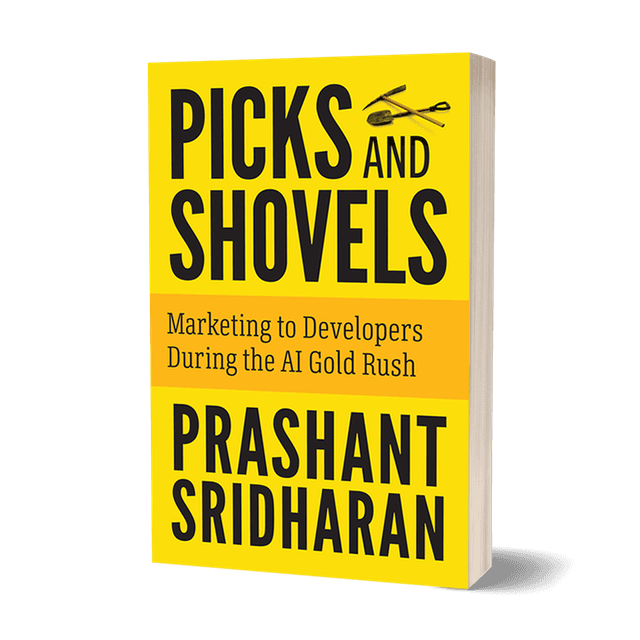
Want the complete playbook?
Picks and Shovels is the definitive guide to developer marketing. Amazon #1 bestseller with practical strategies from 30 years of marketing to developers.