Lookalike audience
LOOK-uh-like AW-dee-ents
An ad targeting audience built by finding people who resemble your existing customers.
A lookalike audience is a targeting option on advertising platforms (LinkedIn, Meta, Google) that finds new people who share characteristics with a source audience you provide. You upload a list of your best customers matching your ICP, and the platform finds similar people you have not reached yet.
The quality of a lookalike audience depends entirely on the quality of the source list. Used well with paid media, lookalikes reduce CPA. A list of your top 200 customers by revenue produces a better lookalike than a list of everyone who visited your website. The more specific and valuable the source audience, the more useful the lookalike.
In B2B, lookalike audiences work best on LinkedIn where professional attributes (job title, company size, industry) are the matching criteria. On Meta and Google, the matching is based on behavioral patterns that are less relevant for B2B targeting. Use lookalikes to expand proven campaigns, not to launch unproven ones.
Examples
A company wants to expand beyond its known prospect list.
The marketing team uploads a list of 500 closed-won customers to LinkedIn. LinkedIn builds a lookalike audience of 50,000 professionals with similar job titles, company sizes, and industries. The lookalike campaign generates leads at 40% lower CPA than broad targeting.
A startup has a small but high-quality customer base.
With only 80 customers, the startup creates a lookalike from its 30 highest-NPS accounts. The resulting audience is small (12,000) but highly targeted. Conversion rates from this audience are 3x the industry average because the source list represents the ideal customer profile.
A campaign uses the wrong source audience.
A marketing team builds a lookalike from all website visitors over the past 90 days. The audience is huge but unfocused because website visitors include job seekers, competitors, students, and existing customers. The campaign performs no better than broad targeting.
In practice
Read more on the blog
Frequently asked questions
What size source list works best for lookalike audiences?
Most platforms recommend 100-300 records minimum, but 500-1,000 is better. The source list should be your best customers or highest-value prospects, not just any contacts. Quality matters more than quantity.
How is a lookalike audience different from retargeting?
Retargeting shows ads to people who already interacted with your company. Lookalike audiences find new people who have never interacted with you but resemble your existing customers. Retargeting is re-engagement. Lookalikes are expansion.
Related terms
Showing ads to people who previously visited your website or engaged with your content. Following up with warm audiences.
A description of the company (not person) most likely to buy, succeed, and expand with your product. Your best-fit customer.
Any marketing channel where you pay for visibility: search ads, social ads, display ads, sponsorships, and paid content placements.
The cost to acquire a customer or conversion through a specific marketing channel. The bottom-line efficiency metric for paid campaigns.
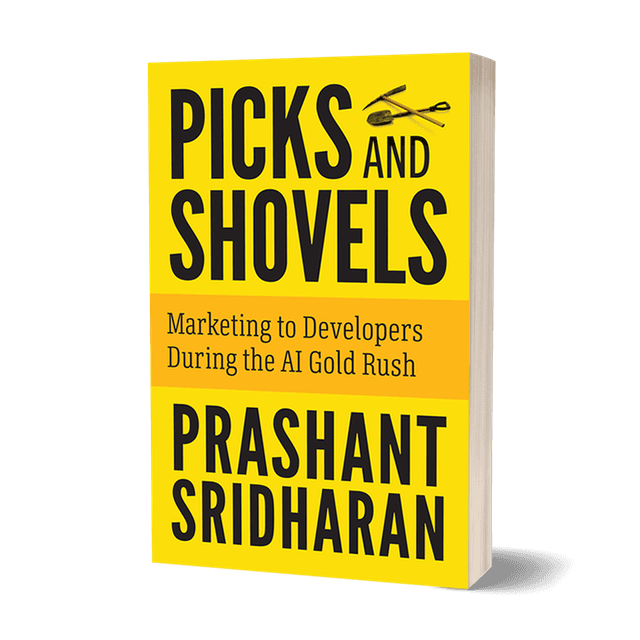
Want the complete playbook?
Picks and Shovels is the definitive guide to developer marketing. Amazon #1 bestseller with practical strategies from 30 years of marketing to developers.