Mastering the PMM interview
PMM interviews are brutal. 400+ applicants per role, months of searching, and high-stakes presentations. Here's how to prepare for interviews at startups, scale-ups, and FAANG.

The PMM job market is unforgiving. 79% of job seekers report anxiety during their search. 72% say job hunting negatively impacted their mental health. You are not alone in finding this stressful.
I have been on both sides of this equation. I have hired hundreds of product marketers at AWS, Microsoft, Twitter, and startups. I have been a Bar Raiser and As Appropriate interviewer for years. And I have watched brilliant candidates fail interviews they should have passed because they were not prepared for what PMM interviews actually test.
This guide covers everything you need to know to prepare.
The numbers you should know
Before your first interview, internalize these statistics. They provide context for why preparation matters.
Competition is fierce: Roles receive 400+ applications within days. Only 4-6 candidates get interviews. That is less than 2%.
The search is long: Average job searches now stretch 5-6 months. This is not a quick process.
The stakes are high: PMM total compensation at FAANG ranges from $186K to $306K. Senior roles exceed $400K. Landing the right role versus settling can mean $50K-100K+ in annual compensation difference.
These numbers are not meant to discourage you. They are meant to show why serious preparation is worth the investment.
Don't just show up and think you can wing it.
My top-level advice, even if you're not currently looking for a job
Always be interviewing. When recruiters call, take the call. When opportunities come to meet with founders, meet with the founder. Stay in practice. You never know when you'll need to use those skills, and you never know what you'll see when you take those meetings. I actually found a great three year stint as a result of a random meeting that I just decided to take on a whim.
What PMM interviews actually test
PMM interviews differ fundamentally from PM interviews. Product managers build products. Product marketers bring them to market. The interview reflects this difference.
I think of product marketing as the ringleaders of the circus. We sit at the nexus of product, sales, marketing, and customer success. Everything in the organization is orchestrated by us. We are the most knowledgeable in the company about the target customer and the ways in which the product meets the needs of that customer.
Six categories dominate every PMM interview:
Positioning and messaging: Can you articulate value? Can you differentiate? Do you understand that positioning is about owning a specific place in your customer's mind?
GTM strategy: Can you take a product to market? Can you prioritize with limited resources? Do you understand the difference between PLG and SLG motions?
Competitive intelligence: Do you understand the market? Can you arm sales teams with battlecards that actually work?
Metrics and analytics: Can you measure what matters? Can you size markets? Do you understand the difference between vanity metrics and business outcomes?
Behavioral questions: Can you influence without authority? Can you work through ambiguity? Can you lead without organizational power?
Case studies and presentations: Can you think strategically? Can you present under pressure? Can you defend your reasoning?
The weight given to each category varies by company type. Startups emphasize scrappiness and versatility. FAANG companies have structured rubrics and formal evaluation criteria. Scale-ups fall somewhere in between.
The four core PMM artifacts
Before we dive into interview preparation, you need to understand what deliverables define the PMM role. Every PMM interview ultimately tests whether you can produce these artifacts:
-
The Market Requirements Document (MRD): Customer research, segmentation, competitive analysis, and product requirements. This is your discovery work.
-
The Positioning Framework: Your positioning statement, messaging hierarchy, and value propositions. I use Aristotle's rhetorical framework: an emotional point about why customers will love the product (pathos), a logical point about unique capabilities (logos), and a credible point about why they can depend on it (ethos).
-
The Go-to-Market Plan: Channel strategy, launch timeline, success metrics. How you bring the product to market with limited resources.
-
The Sales Enablement Package: First-meeting decks, battlecards, FAQs, objection handling. Everything sales needs to sell.
Interviewers will probe your ability to produce each of these, even if they do not name them explicitly.
How AI has changed PMM interviews
PMM interviews have shifted in the past two years. AI is now part of the conversation.
You will be asked about AI. "How would you use AI in your PMM workflow?" is now a standard question. Interviewers want to see that you are thinking about this, not that you have all the answers. Show curiosity and practical awareness.
AI in take-home assignments is a gray area. Some companies explicitly allow it. Others expect you to do the work yourself. If the instructions do not say, assume they want to see your thinking. Use AI for research and brainstorming if you want, but the strategic framework and recommendations should be yours.
Interviewers can spot AI-generated content. Generic frameworks, buzzword-heavy language, and perfectly parallel bullet points are tells. Your work should sound like you.
The bar for research has risen. When everyone has access to AI research tools, shallow research no longer impresses. Go deeper. Talk to customers. Find data that is not in the first page of search results. Original insights matter more than ever.
The interview process by company type
The type of interview you will encounter will depend greatly on the type of company you are meeting with.
Startups (Seed to Series B)
Startup interviews move fast. 2-4 weeks from first contact to offer. The process is less formal but more intense.
Typical structure:
- Founder or CEO screen (30-45 minutes)
- Hiring manager deep dive (60 minutes)
- Cross-functional interviews with product, sales, or engineering (2-3 rounds)
- Sometimes a take-home assignment or presentation
What they test for:
- Versatility. Can you do positioning AND write copy AND enable sales?
- Scrappiness. Can you get results with no budget?
- Speed. Can you ship quickly? Those who ship, win.
- Cultural fit. Will you thrive in chaos?
Common questions:
- "How would you prioritize marketing activities with a $50K budget?"
- "Tell me about a launch you ran with no resources."
- "Our sales team says they are losing to [competitor]. What do you do first?"
- "We are entering a new market. Walk me through your first 90 days."
At startups, they want to know if you can be the entire marketing team when necessary.
Scale-ups (Series C to pre-IPO)
Scale-ups have more structure than startups but less rigidity than FAANG. Expect 3-5 weeks and 4-6 interview rounds.
Typical structure:
- Recruiter screen
- Hiring manager interview
- Peer interviews (other PMMs, cross-functional partners)
- Take-home presentation or case study
- Leadership interview (VP or C-level)
What they test for:
- Strategic thinking with execution ability
- Experience building playbooks and processes
- Ability to work across multiple product lines or segments
- Track record of measurable results
Common questions:
- "Our flagship product is losing traction. Develop a GTM strategy to regain growth."
- "How do you approach competitive analysis when entering a crowded market?"
- "Tell me about a positioning exercise that changed how customers perceived your product."
- "What metrics would you track to measure product launch success?"
Scale-ups want someone who can build the machine, not just operate it.
FAANG and large tech companies
These interviews are rigorous and structured. Expect 4-8 weeks and formal evaluation rubrics.
Google uses an 8+ week process: recruiter screen, written assignment, hiring manager interview, then 4-5 onsite rounds evaluating General Cognitive Ability, Leadership, Role-Related Knowledge, and "Googleyness."
Meta features a distinctive inbound marketing presentation. Candidates receive a real business problem 2-7 days before interviews and deliver a 1-hour presentation. Four additional rounds cover outbound marketing, behavioral skills, and role-specific knowledge.
Amazon is famous for Leadership Principles. The phone screen runs an hour. The loop is 5 hours of continuous interviewing. Every question maps to one or more of Amazon's 16 Leadership Principles. STAR format is mandatory.
Stripe is known for written communication. Candidates complete a written memo task. They expect short direct sentences, clear trade-offs. Technical fluency about APIs and developer workflows is essential.
Sample questions by category
Here are real questions from PMM interviews. Use these to practice.
Positioning and messaging
These questions test whether you can articulate value clearly and differentiate products in competitive markets.
- "Pick a physical product you love. Articulate its value proposition and target segments."
- "What do you think of our product's messaging? How would you improve it?"
- "How would you position [Product X] against [Competitor Y]?"
- "Tell me a terrible product that is marketed well. Tell me a good product that is marketed poorly." (Google)
How to answer well: Be specific. Do not describe features; explain benefits for a defined audience. Show you understand the customer's problem before jumping to the messaging solution. Storytelling matters here.
Use Aristotle's framework if it helps: what is the emotional appeal, the logical appeal, and the credibility appeal? Structure your answer around pathos, logos, and ethos.
GTM strategy
These questions test whether you can take a product to market with a coherent plan.
- "Walk me through how you would launch a new product in a market we do not serve today."
- "Your product's sales have been low for 6 months. What would you do as PMM?"
- "How would you prioritize marketing activities during a launch with limited resources?"
- "Tell me about a launch that did not go as planned. What happened and what did you learn?"
How to answer well: Show a structured framework. Clarify ICP first. Not personas. ICP. Segmentation matters because it is actionable. You can look up a LinkedIn search for a segment; you cannot look up a persona.
Explain how you would validate positioning. Describe your channel strategy. Define success metrics. Acknowledge trade-offs. Be clear about whether you would pursue a PLG or SLG motion, and why.
Competitive intelligence
These questions test whether you understand market dynamics and can arm sales teams effectively.
- "How do you approach competitive analysis?"
- "How would you create a competitive battlecard for our sales team?"
- "Name a competitor doing something well. What can we learn?"
- "What would you do if a competitor launched a feature that matches ours?"
How to answer well: Demonstrate a systematic approach. Explain your sources: product trials, sales call recordings, review sites, customer interviews. Show you can turn raw competitive data into actionable insights for sales.
Admit when competitors do something well. It builds credibility.
Metrics and analytics
These questions test whether you can measure what matters and think quantitatively.
- "What metrics would you track to measure product launch success?"
- "How do you define success for a marketing campaign?"
- "Estimate the market size for [product category]." (Common at Google)
How to answer well: Tie metrics to business outcomes, not vanity metrics. Show you understand the difference between leading and lagging indicators.
For PLG products, know your funnel: awareness, sign-ups, activation, conversion, expansion. For SLG products, know your sales metrics: pipeline generated, win rate, deal cycle, average contract value.
Behavioral questions
These questions test soft skills: influence, collaboration, handling ambiguity, and learning from failure.
- "Tell me about a time you influenced stakeholders without direct authority."
- "Describe a difficult cross-functional relationship and how you managed it."
- "Tell me how you would push back against leadership." (Meta)
- "Tell me about a time you earned the trust of a person or group." (Amazon)
- "Tell me about a time you failed. How did you handle it?" (Amazon)
How to answer well: Use STAR format. Be specific. Include numbers where possible. Focus on YOUR actions, not the team's.
Do not say "we." Say "I." This is not the time to be humble. "I did X. I led X. I drove X." Interviews fail when candidates use too many "we" words.
Mastering the take-home assignment
Take-home assignments are the source of enormous frustration. Companies give you 2-7 days to complete what amounts to a full strategic project, unpaid. It is a lot to ask. But it is also your best chance to demonstrate what you can actually do.
If you ever think it's beneath you to do this, remember: even NFL head coaches have take-home assignments when they interview for jobs. They often arrive at head coaching interviews with thick binders consisting of every aspect of how they would run their team, from who they'd hire on their staff, to how they run practice, and some reports indicate that many head coach candidates even define their nutritional and fitness programs!
Indeed, every time I've ever interviewed for a job, I've taken it upon myself to build what I think the entire marketing plan for the company should be. I do this so that I can gauge a few things on MY end: will the company's philosophy align with my own, will the hiring manager be open to my ideas and experience, and so on.
What companies are really testing
- Strategic thinking: Can you frame a problem correctly? Can you identify the right questions to answer?
- Structured reasoning: Can you organize complex information into a coherent narrative?
- Presentation skills: Can you communicate clearly? Can you hold attention?
- Work quality under pressure: How do you perform with a deadline and competing priorities?
- Coachability: How do you handle pushback during the Q&A?
Common take-home formats
- GTM strategy: "Develop a go-to-market plan for [product or feature]."
- Market entry analysis: "Would you recommend we enter [market]? Present your analysis."
- First call deck: "Create a presentation you would use on a first sales call for [product]." (Common at Datadog)
- Inbound marketing presentation: "Here is a real business problem. Analyze it and present your recommendations." (Meta)
- Written memo: "Write a memo explaining [strategic decision] to leadership." (Stripe, Amazon)
Structural framework for presentations
A solid take-home presentation follows this structure:
-
Executive summary: One slide. What is the recommendation? What is the key insight?
-
Problem framing: What are we actually solving? What is the business context?
-
Analysis: Market data, customer insights, competitive landscape. Show your work.
-
Recommendation: What should we do? Be specific.
-
Go-to-market plan: If applicable. ICP, messaging, channels, timeline.
-
Metrics and success criteria: How will we know if this worked?
-
Risks and trade-offs: What could go wrong? What are we not doing?
-
Appendix: Supporting data, backup slides for Q&A.
Keep the main deck to 10-15 slides. Put detail in the appendix.
Common mistakes to avoid
Being too vague: "We should target enterprise customers" is useless. "We should target Series B-D fintech companies with 50-200 employees who have outgrown their current data platform" is useful. Segmentation over personas. Segments are actionable.
Ignoring the business context: Your recommendation needs to make sense for this company, at this stage, with these resources. A strategy that works for Meta does not work for a Series A startup.
Overloading slides: If you cannot explain a slide in 60 seconds, it is too complex. Simplify.
Not preparing for Q&A: Half the evaluation happens in the Q&A. Anticipate questions. Have backup data ready. Practice defending your reasoning.
Treating it like homework: This is not a school assignment. It is a business presentation. Make recommendations. Take positions. Show judgment.
Handling the Q&A
The Q&A is where many candidates fall apart. Interviewers will poke at your assumptions, challenge your conclusions, and see how you respond under pressure.
When you do not know the answer: Say "I do not know, but here is how I would find out." Then explain your approach.
When they challenge your assumption: Do not get defensive. Acknowledge the challenge. Explain your reasoning. If they have a good point, say so.
When they ask a question you prepared for: Do not rush. Answer clearly, then ask "Would you like me to show the backup slide I prepared on this?"
When they go off-script: Stay calm. It is okay to pause and think. A thoughtful answer after 5 seconds of silence beats a rambling answer delivered instantly.
Why PMM candidates fail
Hiring managers consistently cite the same failure patterns.
Being too vague: "I improved the messaging" does not cut it. "I refined the core value proposition based on 15 customer interviews, which led to a 20% increase in lead-to-opportunity conversion" works.
Describing projects, not contributions: "We launched a product" describes the team. "I developed the positioning framework, wrote the launch messaging, and trained 50 sales reps" describes what you did.
Ignoring company values: Amazon candidates who cannot speak to Leadership Principles fail. Google candidates who do not understand "Googleyness" fail. Research the company's values before your interview.
Weak presentation skills: PMMs present constantly. If your take-home presentation is disorganized, too long, or collapses under Q&A, you are done.
Good versus great: Good candidates talk about work at the task level ("I wrote a great white paper"). Great candidates connect work to strategy ("I needed to increase demand, so I wrote a white paper which generated 500 MQLs and influenced $2M in pipeline").
Tips for mastering your PMM interview
Do your homework
Research the company thoroughly. Use the product. Read their blog. Understand their competitors. Know their recent launches. Form opinions.
Write your version of what their marketing plan should be! Do this even if you're junior. Trust me. After each interview, read your plan and recalibrate based on what you learn. This is not busy work. This is what the elite performers in this role do.
Companies can tell when you have done surface-level research versus when you genuinely understand their business.
Prepare stories, not scripts
For behavioral questions, prepare 8-10 stories from your experience that demonstrate different skills. Each story should cover:
- The situation and context
- Your specific role and actions
- The measurable outcome
- What you learned
Then adapt these stories to different questions rather than memorizing scripted answers.
Practice out loud
Reading your answers is not the same as saying them. Practice speaking your responses out loud. Record yourself. Time yourself. Get feedback from others.
The goal is not to sound rehearsed. It is to be comfortable enough that you can think and speak at the same time.
Know your metrics
Every accomplishment should have a number attached. Revenue influenced. Conversion rate improved. Time saved. Deals closed. If you do not have exact numbers, reasonable estimates are fine.
Manage your energy
Interview loops are exhausting. Eat well. Sleep well. Take breaks between interviews if you can. Your performance in hour 5 matters as much as hour 1.
When you need more support
Job searching is hard. The statistics are daunting. The process is draining. And most people prepare alone, unsure if they are focusing on the right things.
I offer one-hour PMM interview coaching sessions for those who want personalized preparation. We will work on whatever you need most: positioning questions, case study presentations, behavioral stories, or overall strategy.
I have hired hundreds of PMMs. I know what interviewers are looking for. And I can help you present your experience in the strongest possible way.
It is an investment in landing the job you want. Book a session if you would like to work together.
The PMM job market is competitive. But with the right preparation, you can stand out. The candidates who get offers are not always the most experienced. They are the ones who are best prepared.
Go get that job.

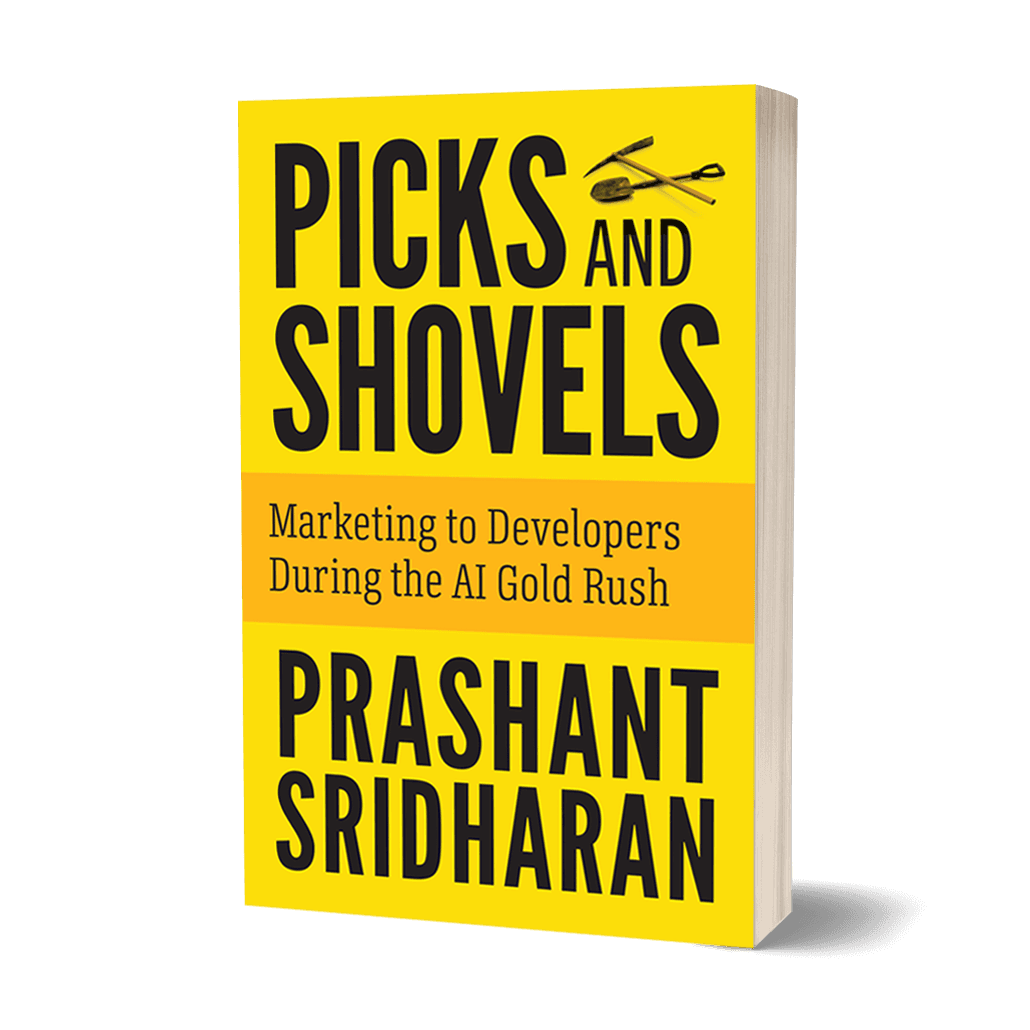
Developer marketing expert with 30+ years of experience at Sun Microsystems, Microsoft, AWS, Meta, Twitter, and Supabase. Author of Picks and Shovels, the Amazon #1 bestseller on developer marketing.
Want the complete playbook?
Picks and Shovels is the definitive guide to developer marketing. Amazon #1 bestseller with practical strategies from 30 years of marketing to developers.
Don't get left behind by AI
Sign up for the Strategic Nerds Newsletter and get expert advice on Developer Marketing and Developer Relations so you can navigate technical marketing in the AI era.