Syndication
sin-dih-KAY-shun
Republishing your content on third-party platforms to reach a wider audience while keeping the original on your site.
Content syndication is republishing your content on other platforms after it appears on your own site. You write a blog post, publish it on your blog, then republish it on Medium, LinkedIn, or an industry publication. The goal is to reach audiences who would never find your blog directly.
The SEO concern is duplicate content. Google generally handles this well if you use canonical tags pointing to your original URL. Most syndication platforms (Medium, LinkedIn) support canonical URLs. This tells Google that your site is the original source.
Syndication works best for awareness, not direct traffic. Readers on Medium may not click through to your site. But they see your name, your company, and your expertise. Over time, this builds recognition. When they later encounter your product, you are not a stranger.
Examples
A company syndicates blog posts to Medium.
Each post goes live on the company blog first. Three days later, it is republished on Medium with a canonical tag pointing to the original. The Medium version includes a byline linking back to the author's profile and the company.
A developer advocate cross-posts to dev.to.
Technical tutorials published on the company's developer blog are syndicated to dev.to a week later. The dev.to community engages through comments and shares. The canonical tag protects the original post's SEO value.
A content team syndicates to an industry newsletter.
The newsletter reaches 30,000 subscribers in the company's ICP. They provide an edited excerpt of the blog post with a link to the full article. This drives 500 visits on the day it runs.
Frequently asked questions
Does content syndication hurt SEO?
Not if you use canonical tags correctly. A canonical tag on the syndicated version tells Google that your original post is the authoritative source. Without it, Google might index the syndicated version instead of yours.
Should you syndicate every blog post?
No. Syndicate your best, most broadly relevant content. Highly technical or niche posts may not perform well on general platforms. Product-specific content may confuse a syndication audience. Choose posts with broad appeal and clear value.
Related terms
The process of promoting and sharing content across channels to reach your target audience after publication.
Adapting a single piece of content into multiple formats to reach different audiences across different channels.
Writing and publishing content on another website to reach their audience and earn a backlink to your own site.
A regularly updated section of a website where a company publishes articles to attract, educate, and engage its target audience.
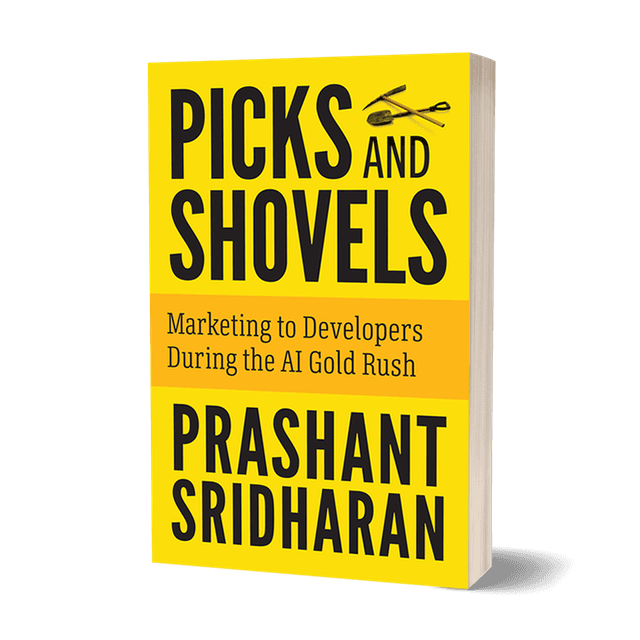
Want the complete playbook?
Picks and Shovels is the definitive guide to developer marketing. Amazon #1 bestseller with practical strategies from 30 years of marketing to developers.