Angel investor
AYN-jul in-VES-ter
A high-net-worth individual who invests their personal money in early-stage startups in exchange for equity.
An angel investor is an individual who invests their own money in startups. Unlike VCs who invest from a fund, angels write personal checks. Angel investments are typically $10K to $250K and happen at pre-seed or seed stage.
Angels are often former founders or executives who have both capital and expertise. The best angels provide more than money: they offer industry connections, operational advice, and credibility. An angel who was the VP of Engineering at Stripe carries different weight than an anonymous check.
Angel investing is high risk. Most startups fail. Angels invest knowing that 7 out of 10 investments will return nothing. The math works because the 1-2 winners return 10-50x, which more than compensates for the losses. Most angel investments use SAFE notes for simplicity.
Examples
A founder raises from angel investors.
The founder raises $500K from 8 angel investors. Each invests $25K-$100K on SAFE notes. The angels include a former CTO of a public company, a successful founder in the same space, and five operators with relevant industry experience.
An angel provides operational help.
One angel investor is a former VP of Sales who built the sales team at a similar company. She spends 2 hours per month advising the founder on sales process, pricing, and hiring. Her advice is more valuable than her $50K investment.
An angel syndicate invests together.
A well-known angel leads a $200K investment and invites 15 other angels to participate through an AngelList syndicate. Each angel contributes $5K-$30K. The lead angel does the diligence; the others invest based on their reputation.
Frequently asked questions
How do you find angel investors?
Through your network (former colleagues, founders, industry connections), angel networks (AngelList, local angel groups), accelerator programs, and introductions from other founders. Warm introductions convert better than cold outreach.
How much equity do angel investors get?
Angels typically invest on SAFEs or convertible notes, so the exact equity is determined at the next priced round. As a rough guide, angels collectively own 5-15% of the company after the seed round converts.
Related terms
A form of private equity financing where firms invest fund money in high-growth startups in exchange for equity.
The earliest stage of startup funding, typically $100K-$1M from angels or small funds to build the initial prototype.
The first significant round of funding for a startup, typically raising $1-5M to validate the product and find initial customers.
A simple investment instrument created by Y Combinator that converts to equity at the next priced funding round.
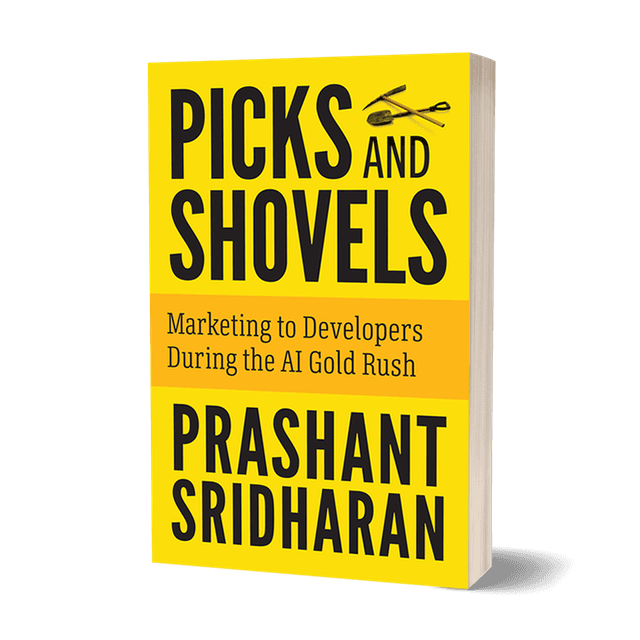
Want the complete playbook?
Picks and Shovels is the definitive guide to developer marketing. Amazon #1 bestseller with practical strategies from 30 years of marketing to developers.