Testimonial
test-ih-MOH-nee-ul
A direct quote from a customer endorsing your product. Best when specific, attributed to a real person, and including measurable results.
A testimonial is a customer quote that endorses your product. 'We reduced deployment time by 85% in the first month.' That is a testimonial. It is more credible than your own marketing copy because it comes from a customer.
The strongest testimonials are specific (include metrics), attributed (include the person's name, title, and company), and relevant (from a company the prospect can relate to). 'Great product!' from an anonymous user is weak. 'We cut deployment failures from 12 per month to 2. Our engineering team gets 3 hours back per week.' from Sarah Chen, VP of Engineering at Acme Corp is strong.
Collect testimonials proactively. After a successful onboarding, ask the champion for a quote. After a positive QBR, ask for a testimonial. After a customer gives you a high NPS score, ask if they would be willing to be quoted. Build testimonial collection into the customer success workflow.
Examples
A testimonial on the homepage.
'We evaluated five tools and chose [product] because of the documentation quality and the speed of setup. We were in production in 2 days.' - Marcus Lee, CTO, FinTech Corp. This testimonial addresses two common concerns: evaluation complexity and implementation time.
Video testimonial for the sales team.
A 90-second video of a customer describing their experience. The AE sends it to prospects at similar companies. The video converts 3x better than written testimonials because seeing a real person talk about their experience builds trust that text cannot match.
A testimonial request at the right moment.
The customer just completed a successful migration. The CSM says: 'I am glad the migration went well. Would you be open to sharing a brief quote about your experience? We can draft something for your review.' 60% of satisfied customers say yes when asked at the right moment.
In practice
Read more on the blog
Frequently asked questions
How do you get customers to provide testimonials?
Ask at moments of success: after a smooth onboarding, a positive QBR, or a high NPS response. Draft the testimonial for them and ask for approval. Make it easy. Most customers will say yes if you do the writing work and they just need to approve.
What makes a strong testimonial?
Specific metrics, a real person's name and title, a recognizable company name, and relevance to common buyer concerns. The testimonial should answer a question the prospect has: 'Will this work for my situation?' 'Is implementation difficult?' 'Does it deliver real results?'
Related terms
Evidence that other companies trust and use your product. Logos, testimonials, ratings, and customer counts that reduce buyer risk.
A detailed story of how a specific customer used your product to solve a real problem. The most persuasive content in B2B marketing.
A customer loyalty metric based on one question: how likely are you to recommend us? Score ranges from -100 to +100.
The team and practice of ensuring customers achieve their goals with your product. Owns retention, expansion, and advocacy.
Want the complete playbook?
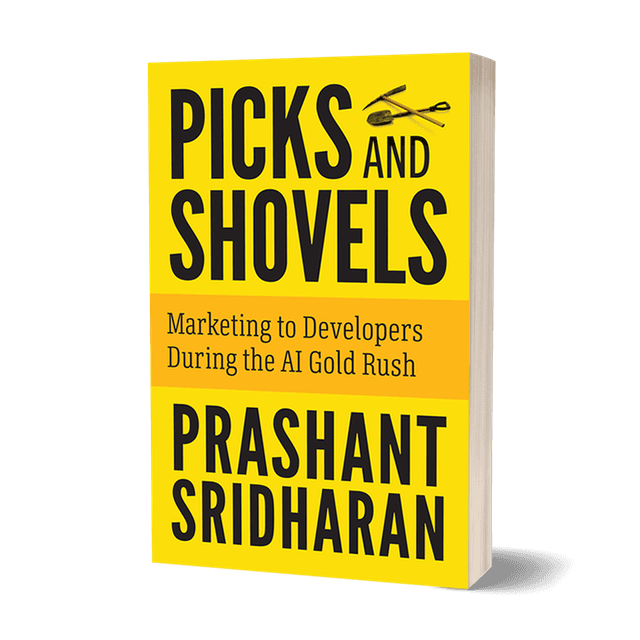
Picks and Shovels is the definitive guide to developer marketing. Amazon #1 bestseller with practical strategies from 30 years of marketing to developers.