Stock options
stok OP-shunz
The right to purchase company shares at a fixed price (the strike price), typically granted to employees as part of compensation.
Stock options give you the right to buy shares at a specific price (the strike price or exercise price). If the company's shares are eventually worth more than the strike price, the difference is your profit.
There are two types. ISOs (Incentive Stock Options) have favorable tax treatment but can only be granted to employees. NSOs (Non-Qualified Stock Options) can be granted to anyone (contractors, advisors) but have less favorable tax treatment.
The strike price is set at the fair market value when the options are granted. If you receive options with a $1 strike price and the company eventually sells at $50 per share, you profit $49 per share. You must exercise (buy) the options to own the shares, which requires paying the strike price. Options are subject to a vesting schedule, typically four years with a one-year cliff.
Examples
An employee receives a stock option grant.
The offer includes 20,000 ISOs with a $2.00 strike price on a 4-year vesting schedule. At IPO, the stock price is $30. The employee exercises: pays $40,000 (20,000 x $2) to acquire shares worth $600,000. Pre-tax profit: $560,000.
An employee exercises options early.
At a startup, the strike price is $0.10. The employee exercises all 50,000 options immediately (paying $5,000) to start the clock on long-term capital gains tax treatment. If they wait until the stock is worth $50, the tax bill is much higher.
Options expire after an employee leaves.
The employee leaves the company with 10,000 vested options. Their option agreement gives them 90 days to exercise. Exercising costs $20,000 at the $2.00 strike price. If they do not exercise within 90 days, the options expire worthless.
Frequently asked questions
What is the difference between stock options and RSUs?
Stock options give you the right to buy shares at a set price. You profit from the difference between the strike price and the current price. RSUs are actual shares given to you. You do not have to buy anything. RSUs are simpler but options can be more valuable if the company grows significantly.
Should I exercise my options early?
It depends on the strike price, your cash situation, and tax implications. Early exercise with an 83(b) election can reduce taxes if the company grows. But you are paying cash for shares in a startup that might fail. Consult a tax advisor for your specific situation.
Related terms
Ownership in a company represented by shares of stock, which entitle the holder to a proportional share of the company's value.
The process by which an employee earns their equity over time, typically over four years with a one-year cliff.
A company's promise to give an employee shares of stock after vesting conditions are met, with no purchase required.
The minimum period an employee must work before any equity vests, typically one year in startup vesting schedules.
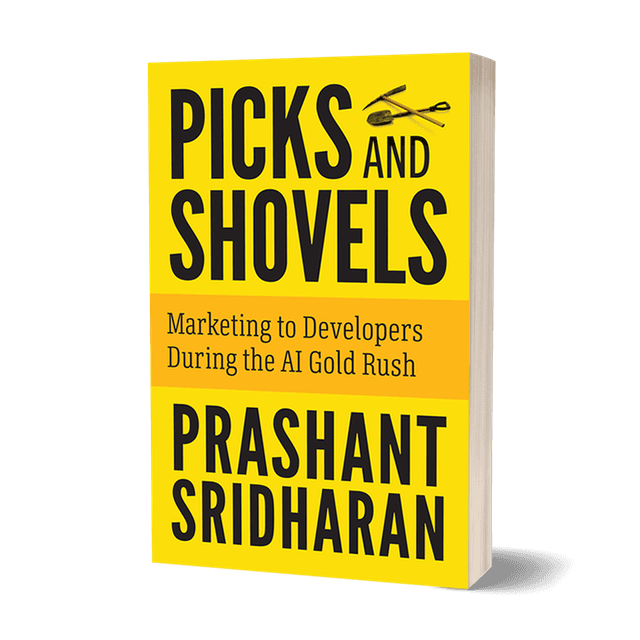
Want the complete playbook?
Picks and Shovels is the definitive guide to developer marketing. Amazon #1 bestseller with practical strategies from 30 years of marketing to developers.