Outside-in content
owt-SYD in KON-tent
Content that addresses topics your audience cares about broadly, attracting them before they know they need your specific product.
Outside-in content starts with what your audience cares about, not what you sell. It addresses the problems, questions, and interests of your target developer audience without leading with your product. The content earns attention and trust first. Product awareness follows naturally.
Examples: a deployment platform writing about CI/CD best practices. A database company writing about data modeling patterns. A monitoring tool writing about incident management. The content is genuinely useful regardless of which product the reader uses.
Outside-in content works for developer audiences because developers hate being sold to. Content that leads with product features feels like marketing. Content that leads with their problems feels like help. The former gets ignored. The latter gets bookmarked, shared, and referenced.
Examples
A monitoring company publishes outside-in content.
The blog post is 'How to run an effective postmortem.' It covers postmortem best practices, templates, and common mistakes. The monitoring product is not mentioned until a brief note at the end: 'We built our incident timeline feature to make postmortems easier.' The post gets 20,000 views and ranks for 'postmortem template.'
Outside-in content attracts developers who later become customers.
A developer finds the company's blog post about API rate limiting while researching the topic for their own project. They bookmark it. Months later, when they need a deployment tool, they remember the company. The outside-in content planted a seed.
A content strategy balances outside-in and inside-out.
The content mix is 70% outside-in (industry topics, best practices, developer challenges) and 30% inside-out (product tutorials, feature announcements, case studies). The outside-in content drives traffic. The inside-out content converts that traffic.
In practice
Read more on the blog
Frequently asked questions
What is the difference between outside-in and inside-out content?
Outside-in starts with the audience's problems and interests (regardless of product). Inside-out starts with your product and its features. Outside-in attracts and builds trust. Inside-out educates and converts. Both are necessary. The ratio should favor outside-in.
Does outside-in content drive revenue?
Indirectly but measurably. Outside-in content drives organic traffic, builds brand awareness, and establishes trust. Developers who find value in your educational content are more likely to try and buy your product later. Track the path from content engagement to signup to purchase.
Related terms
Content that starts from your product and shows developers how to use it, including tutorials, feature guides, and product documentation.
The plan for creating, publishing, and governing content that achieves specific business goals for a defined audience.
Content that establishes a person or company as an authority in their field by sharing original insights and perspectives.
Want the complete playbook?
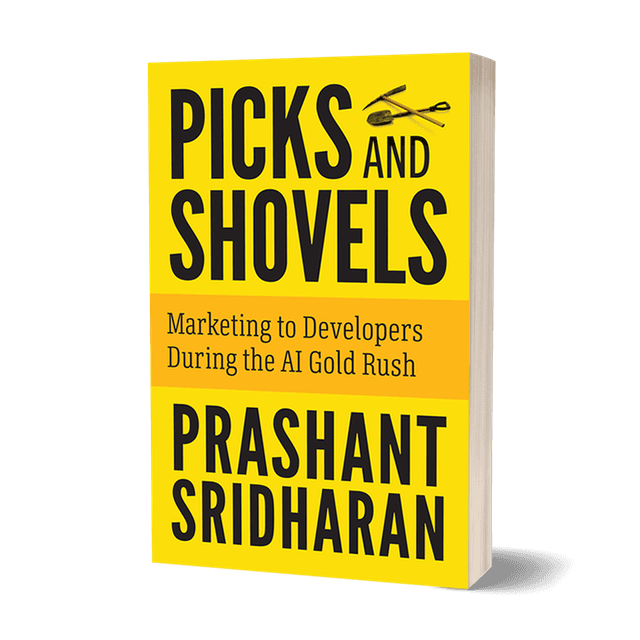
Picks and Shovels is the definitive guide to developer marketing. Amazon #1 bestseller with practical strategies from 30 years of marketing to developers.