Epic
EP-ik
A large body of work that can be broken into smaller user stories, representing a significant feature or initiative.
An epic is a big chunk of work that takes multiple sprints to complete. It groups related user stories under a common theme. 'Build alert notification system' is an epic. The individual stories (Slack alerts, email alerts, alert thresholds, alert history) are the pieces.
Epics help teams see the big picture while working on the small pieces. A sprint focuses on individual stories. The epic tracks whether the overall initiative is progressing. When all the stories in an epic are complete, the epic is done.
Most project management tools (Jira, Linear, Shortcut) support epics as a first-class concept. The typical hierarchy is: theme > epic > story > task. Not every team uses all levels. The point is to organize work at a level that helps the team plan and communicate.
Examples
A PM creates an epic for a new feature.
Epic: 'Multi-channel alert notifications.' Stories: set up Slack integration, set up email notifications, build alert threshold configuration, create alert history page, add alert muting. The epic spans three sprints.
A team reviews epic progress in a sprint review.
The PM shows that 8 of 12 stories in the epic are complete. The remaining 4 are planned for the next sprint. Stakeholders can see overall progress without tracking individual stories.
An epic is deprioritized and broken up.
Halfway through the epic, priorities shift. The team completes the high-value stories (Slack and email alerts) but defers the lower-priority stories (alert history, alert muting) to a future sprint. The epic is partially complete but the most valuable work is done.
Frequently asked questions
How big should an epic be?
An epic typically spans 2-6 sprints and contains 5-20 user stories. If it is smaller, it might just be a story. If it is larger, consider breaking it into multiple epics. The goal is a size that a team can track and complete in a reasonable timeframe.
Who creates epics?
Product managers create epics based on the roadmap and product strategy. Engineers may also propose epics for technical initiatives (paying down tech debt, migrating to a new framework). The PM prioritizes epics based on business impact.
Related terms
A short, plain-language description of a feature from the perspective of the user who wants it.
A meeting where the team selects which work to complete in the upcoming sprint and plans how to accomplish it.
A software development methodology that delivers work in short iterations with continuous feedback and adaptation.
An Agile framework that organizes work into fixed-length sprints with defined roles, ceremonies, and artifacts.
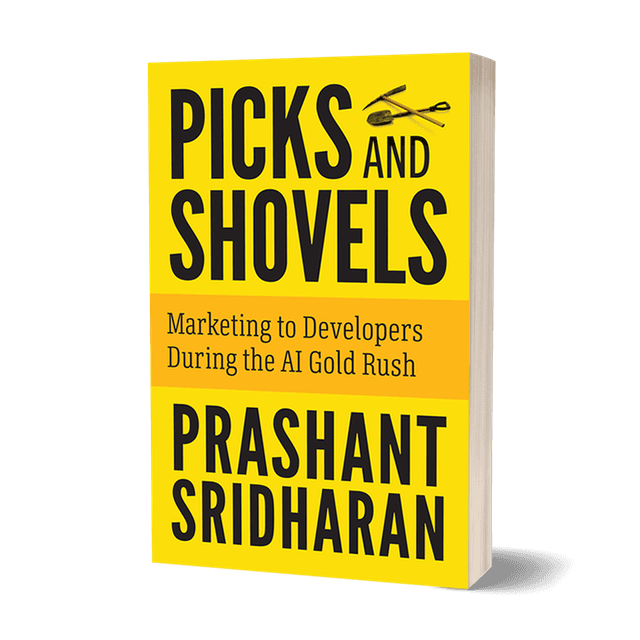
Want the complete playbook?
Picks and Shovels is the definitive guide to developer marketing. Amazon #1 bestseller with practical strategies from 30 years of marketing to developers.