Enterprise pricing
EN-ter-prize PRY-sing
Custom pricing for large organizations, typically requiring a sales conversation. The "Contact us" plan on your pricing page.
Enterprise pricing means the price is not on the website. Large organizations get a custom quote based on their size, usage, compliance requirements, and negotiating leverage. The buyer contacts sales, discusses their needs, and receives a proposal.
This exists because enterprise deals are complex. A 5,000-person company needs SSO integration, custom SLAs, dedicated support, data residency guarantees, and legal review of your terms of service. These requirements vary wildly between companies. A fixed price cannot accommodate the variance.
The tradeoff is friction. Every "Contact us" button is a conversion killer for developers who want to evaluate your product without talking to sales. The best companies minimize this friction by offering self-serve tiers that let developers start building immediately, then layer on enterprise pricing when the procurement team gets involved.
Examples
A startup closes its first enterprise deal.
A Fortune 500 company wants to use your API platform. They need SOC 2 compliance, 99.99% SLA, dedicated infrastructure, and a BAA for HIPAA. Your self-serve plan is $99/month. The enterprise contract comes in at $150,000/year. Same product, different wrapper.
Enterprise pricing negotiation.
A company with 2,000 developers wants GitHub Enterprise. List price: $21/user/month ($504,000/year). They negotiate a 3-year commitment at $16/user/month ($384,000/year). GitHub trades per-seat margin for a locked-in multi-year contract.
A company debates whether to add enterprise pricing.
A developer tools startup does $2M ARR entirely through self-serve. Their largest customer pays $500/month. A Fortune 100 company asks for SSO, SAML, and a custom SLA. The startup adds an enterprise tier, hires its first AE, and closes the deal at $80,000/year.
In practice
Read more on the blog
Frequently asked questions
When should a startup add enterprise pricing?
When large companies start asking for features your self-serve plans cannot accommodate: SSO, custom contracts, SLAs, compliance certifications. If you are getting inbound requests from companies with 500+ employees, it is time. Do not add enterprise pricing preemptively. Wait for demand.
Should I show enterprise pricing on my website?
Show a range if you can ("Starting at $X/month"). Never leave the enterprise tier completely blank. At minimum, list what is included (SSO, SLA, dedicated support) so buyers can self-qualify before contacting sales. "Custom pricing" is fine. A completely empty tier is not.
Related terms
Offering multiple pricing plans at different price points, each with more features or higher limits. The classic Good/Better/Best model.
A buying experience where customers sign up, configure, and pay without talking to a salesperson. Credit card in, product out.
A buying model where customers start self-serve but get human help for larger deals. The middle ground between PLG and traditional sales.
The annualized value of a single customer contract. Tells you about individual deal size, while ASP tells you the average across all deals.
A contract where the customer commits to paying for a full year, usually in exchange for a discount. Locks in revenue for the vendor.
Want the complete playbook?
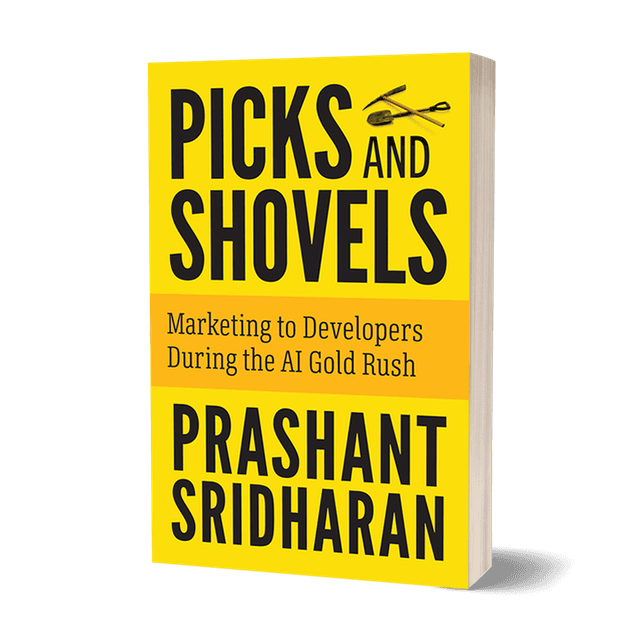
Picks and Shovels is the definitive guide to developer marketing. Amazon #1 bestseller with practical strategies from 30 years of marketing to developers.