Open source landing page templates you can actually program
Every landing page builder is drag-and-drop. None of them have APIs. So I built templates that are just TypeScript configuration objects.

I built fifteen open-source landing page templates in Next.js, TypeScript, and Tailwind CSS that work as configuration objects instead of drag-and-drop layouts. Clone the repo, fill in the data, and deploy. Your AI assistant can generate variations because the templates are just code.
I needed landing pages for a campaign last month. Simple ones. A webinar registration page and a thank you for registering page.
So I looked at the usual suspects. Unbounce. Instapage. Leadpages. They all work the same way. Drag a hero block here. Drop a form there. Click publish. So exhausting.
But I wanted to generate pages programmatically. I wanted to define a landing page as a TypeScript configuration object, hand it to Claude Code, and have it build ten variations in five minutes. None of the legacy tools have APIs or MCP servers. Unbounce charges per page. Instapage wants $79/month minimum. You need to build everything tediously, by hand, through a visual editor that hasn't fundamentally changed since 2015.
So I built my own. Fifteen open source landing page templates, all defined as TypeScript configuration objects. No drag-and-drop. No vendor lock-in. You fill in the data, and the template renders it.
The repo is on GitHub: CoolAssPuppy/landing-pages.
Clone it. Swap in your logo. Pick a color theme. Deploy to Vercel. Set up your sub-domain (e.g., build.your-domain.com). You have a production landing page system in a few minutes.
Why configuration over code
Visual editors can't do what I actually need from a marketing workflow:
- Spin up pages for multiple campaigns at once
- Keep branding consistent across dozens of pages
- Let an AI assistant generate or modify pages
- Version control your landing pages alongside your codebase
- Avoid paying per-page fees to a SaaS vendor
When your pages are TypeScript objects, all of this becomes trivial. You can diff them. You can lint them. You can write scripts that generate them. You can point Claude Code at a template and say "make me a webinar registration page for this event" and it will produce a valid configuration file in seconds.
I wrote about using AI in my own marketing workflow last year. This repo is a direct extension of that approach. If your marketing artifacts are structured data instead of pixels trapped in a visual editor, AI can work with them.
The templates
Fifteen templates cover the pages marketing teams build most often:
- Lead gen. Ebook downloads, webinar signups, demo requests. Hero section, content blocks, social proof, and a form.
- Thank you. Confirmation pages after form submission. Success message, CTAs, and secondary content links.
- Legal. Terms of service, privacy policies, contest rules. Table of contents with prose sections.
- Waitlist. Coming soon and early access pages. Countdown timer, feature preview, and email capture.
- Resource hub. Content libraries and resource centers. Filterable grid with categories, featured resources, and a newsletter CTA.
- Partner. Co-marketing and partner promotion pages. Logo lockup, joint value propositions, and special offers with expiry dates.
- Comparison. Product comparison and "vs." pages. Feature comparison table, split sections, timeline, and FAQ.
- Pricing. Sale pricing and promotional offers. Tiered pricing cards, feature comparison matrix, and urgency countdown.
- Webinar. Event registration pages. Date and time info, speaker bios, agenda, and a registration form.
- Case study. Customer success stories. Challenge, solution, and results narrative with metrics and a pull quote.
- Product launch. Feature announcements and releases. Badge, video embed, feature highlights, code snippet, and FAQ.
- Demo request. "Book a demo" pages. Split hero with an embedded form, calendar embed, and value propositions.
- Job listing. Career pages and job postings. Role details, responsibilities, requirements, benefits, and an apply form.
- Event recap. Post-event and on-demand content pages. Recording embed, speaker grid, slides download, and related resources.
- Integration. Integration marketplace pages. Partner logo lockup, setup steps as a timeline, code snippet, and features.
Every template supports dark mode, responsive layout, and SEO metadata out of the box.
How do you use them?
Three steps.
First, clone the repo and install dependencies:
git clone https://github.com/CoolAssPuppy/landing-pages.git
cd landing-pages
npm installSecond, customize your branding. Open src/config/site.ts and set your company name, logo, navigation, and footer. Drop your logo files in public/images/. Pick a color theme in src/app/globals.css if you do not like the default.
Third, create a page. Copy any example from data/pages/examples/ into data/pages/, change the slug, update the content, and register it in data/pages/index.ts. Run npm run dev and visit your page at localhost:3000/your-slug.
That is it. A new landing page is a TypeScript file with about forty lines of configuration.
Built-in form handling
Forms are the whole point of a landing page. These templates ship with a server-side form handler that includes CSRF protection, rate limiting, input sanitization, and bot detection. Out of the box, forms integrate with HubSpot and Customer.io. You add your API keys to .env.local and form submissions flow straight into your CRM.
The integration layer is designed to be extended. Adding Salesforce, Marketo, Mailchimp, or any other platform means writing a single async function in src/lib/integrations/.
If you add your own integrations, please submit a pull request so others can benefit.
Get started now
Clone the repo and follow the instructions in the README.md file: github.com/CoolAssPuppy/landing-pages.

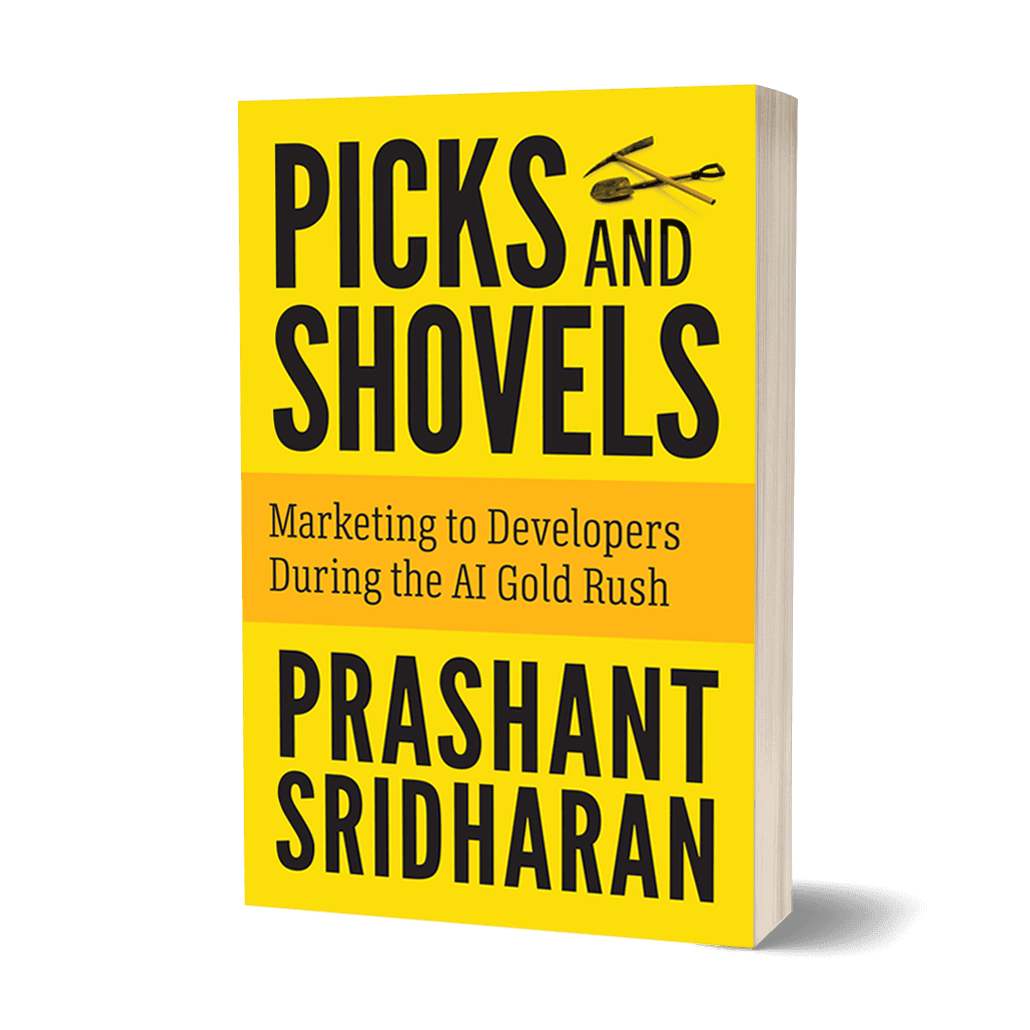
Developer marketing expert with 30+ years of experience at Sun Microsystems, Microsoft, AWS, Meta, Twitter, and Supabase. Author of Picks and Shovels, the Amazon #1 bestseller on developer marketing.
Want the complete playbook?
Picks and Shovels is the definitive guide to developer marketing. Amazon #1 bestseller with practical strategies from 30 years of marketing to developers.